Doom'n'Roll! That was the spontaneous reaction of one of the guests, when I started playing Hopkins (The Witchfinder General) at a party once. I think, there is barely a better name for what the band was doing on this album.
If is doom-metal usually identified with slow, dragging rhythms and bleak expressions of desperation, Carnival Bizarre is - to me, and obviously to my guest as well - a lively and irresistibly good-mooded record, that just makes you want to move. Yeah, its party music, whether Cathedral intended that or not and lets be honest: song titles like Fangalacticus Supergoria really must been a hell lot of fun to make up!
The band itself was founded in 1989, by Lee Dorrian, after he left Napalm Death, where he wasn't happy with the direction the band took, namely death metal. Something I definitely can emphasize with. And thank the heavens (or hell) for his decision. It brought us a band that influenced and enriched the genre like not many before.
Stilistically, Carnival Bizarre features, as you would expect in doom, heavy riffs that rival the Himalayas (or HP Lovecraft's Mountains of Madness, your choice), combined with driving and varied rock-grooves and Dorrian's characteristic shouty, but clean voice. He might not have the range of a Ronnie James Dio, but he certainly knows how to transport excitement.
It is maybe a bit of an untypical doom-record, but certainly it is an excellent one regardless. Oh, and its hard to top the imagery of their video to Hopkins. What a hedonistic delight!
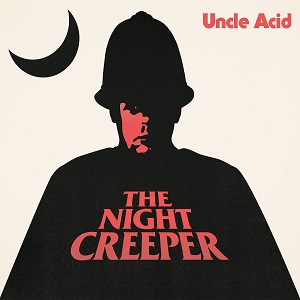
If you ever wondered, how it would have sounded, if Black Sabbath and the Beatles got merged together in some weird teleportation or cloning accident, Uncle Acid & the Deadbeats' The Night Creeper might give you the answer: Imagine Lucy in the Sky with Diamonds played with heavy riffing guitars, eery, distorted vocals and repetitive, hypnotic grooves. A gloomy psychedelic nightmare you may find, you can't get enough from.
Thematically, the album revolves around the eponymous Night Creeper, a Jack-the-Ripper-style serial killer. And it does it brilliantly. The way it transports its distinctive 60s-psychedelica-atmosphere, like an expressionist horror film inside your head. The haunting vocals, the Sabbath-like chord progressions and the very retro production - everything just plays together just brilliantly, creating a truly unique experience.
This said, Uncle Acid & the Deadbeats is certainly not everyone's taste and if you are into more conventional, or simply more modern metal, you might not enjoy them too much - for all the reasons mentioned above!
To me, Uncle Acid are one of the most significant discoveries in the recent years. Retro-doom at its finest, with a lot of emotional impact and their own, unique character. Not an easy thing to achieve, but they delivered brilliantly.
Electric Wizard has seen quite a soar in popularity in recent time. Something I find pleasantly surprising, since their music isn't exactly the most mass-market compatible. Maybe though, that's exactly the reason why: there is a certain underground authenticity in music that consciously tries to be as far away as possible from the calculated, watered-down mainstream style that so many bands pursue. This doesn't means they aren't accessible, though. With the right ears, attuned to Black Sabbath's Master of Reality or some Cathedral, with the hypnotic repetition of Hawkwind's far-out space-trips, Electric Wizard quickly speaks to you.
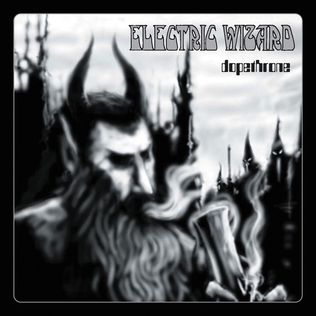
To me, their greatest album remains Dopethrone from the year 2000. A raw, droning masterpiece, recorded, according to bandleader Jus Oborn, literally in a drug and alcohol-induced stupor - and it shows in the best sense possible. At its time, Dopethrone did expand the boundaries of metal into a weird, tribal ritual of excess.
While being genuinely dark and monstrous in its sound, with massive guitar-riffs and shouting, madman-vocals drenched with distortion, the album also has an undeniable, and actually quite irresistible, groove and playfulness to it. The album really rocks, which is quite an achievement in this context. It may be a ride through hell and purgatory, but it does it with style and grace, showcasing some musical talent and inspiration that really set Electric Wizard apart from most bands of the genre.
In a way it's a bit tragic that Electric Wizard had their peak so early on. It's not like the successor-albums were bad - to the contrary - but in Dopethrone the band achieved a perfect balance of chaotic, raw emotion and the discipline that allows them to actually take all their energy and turn it into a truly mastrful album.
His stints at Rainbow and Black Sabbath catapulted the unknown singer Ronnie James Dio (born Ronald James Padavona), of the unknown rockband Elf up at the Mount Olympus of hardrock and heavy metal. After leaving Sabbath in 1982, he formed his own group the following year. Conveniently named Dio, after himself. And probably to ensure this time there are no doubts about who is its leader.
The new band basically picked up where he stopped. With straightforward fantasy-inspired heavy metal as it would become archetypical for the 1980s. Unlike the guitar-dominated sound of Sabbath or Rainbow though, with more emphasis on the vocals. And rightly so: Ronnie James Dio's voice is as distinctive as it is powerful. Together with Judas Priest's Rob Halford, he probably was the metal vocalist of the 80s. A singer you would recognize amongst thousands. So dynamic and yes, almost operatic in its range and power. Always giving that little extra emphasis, that is needed for proper heavy metal theatrics. He could sing your shopping list and make it sound like an tolkienesque-epic.
As brilliant as his voice was though, it would have been a waste if the other musicians weren't up to their task. And hell, they are. Guitarist Vivian Campbell's playing is in every sense a proper substitute for Ritchie Blackmore or Toni Iommi, without the danger of mimicry, and the rhythm-section, including Jimmy Bain on bass and drummer Vinnie Appice, who he snatched from Black Sabbath (where they recorded Mob Rules together), delivers a seemingly effortlessly brilliant performance. The whole album just marches ahead with straightforward classic heavy metal. Every fill, every riff and every solo spot on. Holy Diver feels like the band is playing together for a long time already. No surprise that quite a number of songs, like Holy Diver, Don't Talk to Strangers, Straight Through Your Heart and Rainbow in the Dark, became live-staples and are now regarded as heavy metal classics.
Musically, Holy Diver is of course not the most diverse of all records. It pretty much does what its cover-art promises. Well. not literally. Though, that would be quite something... Anyway. if you expect introvert subtlety, then you might have misunderstood the whole concept of heavy metal in the first place!
All in all, Holy Diver is epic 80's heavy metal at its finest and truly a must-know-album, that helped defining the genre. The band in this line-up would record two more albums, The Last in Line (1984) and Sacred Heart (1985), before descending into power struggles and instability. To me, these three albums mark the highlight of the band. Later albums still have their moments, but won't offer such an abundance of consistently strong material.
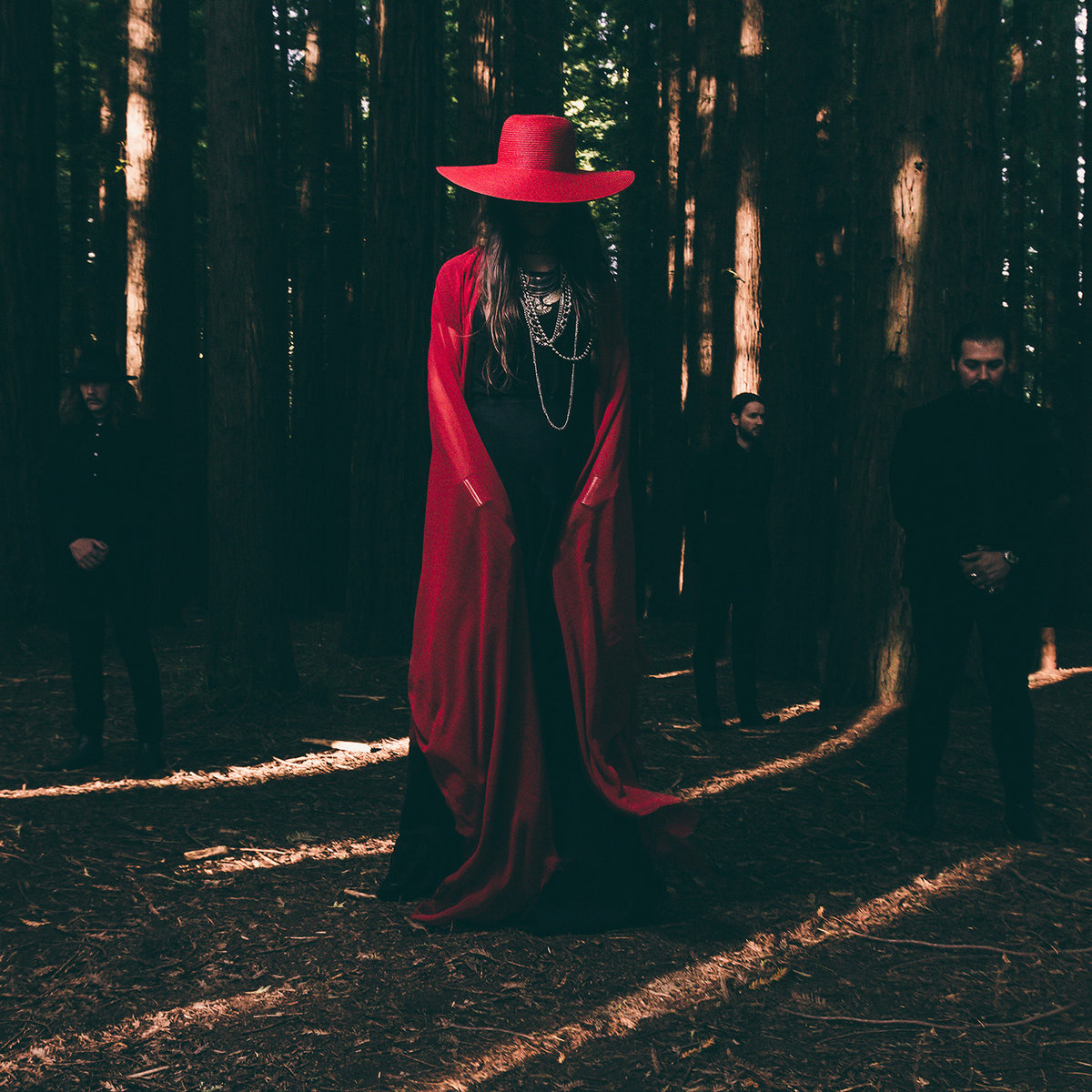
Devil Electric are a recent discovery of mine. As the name and the cover picture of their debut album suggest, they are another example of the ever-growing Black-Sabbath-inspired, female-fronted proto-doom-occult rock genre. Phew, what a word! And while they certainly don't reinvent the wheel (or their genre), the quartet from Australia knows how to make some excellent, gloomy music.
On the instrumental side, Devil Electric are indeed closely resembling early Black Sabbath. With a lot of heavy, fuzzy guitar, riffing on doomy intervals and accompanied by a rhythm section that stomps along like an iron behemoth with an impeccable sense of groove in its hulking limbs. So far, so good! Nothing revolutionary, but a very compelling performance. The really outstanding part however, that adds so much character to the band, is its vocalist.
With her bright, light-footed voice she often appears to dance above all the growling, heaviness the band unleashes. The result is - by all the contrast she adds to the sound - a nevertheless quite symbiotic feel, with interesting changes in rhythm and dynamics. It is this dance of contrasts that keeps Devil Electric, contrary to all the familiarity of their songs, varied and engaging - and a little bit unpredictable too. Very effective.
All in all, a strong debut with a lot of 60s- and 70s vibe. It could be the ideal soundtrack to a Hammer film. With misty graveyards, scantly clad witches and generous amounts of blood. Given the number of similar acts I sometimes wish they would stray away from the established, clichéd Black Sabbath-sound a bit more and experiment a bit more with their own style. The potential is certainly there.
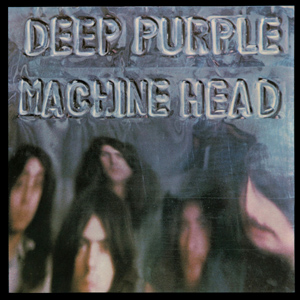
For many Machine Head is the best album of the Mk2 era. An opinion I never really shared. Sure it has Highway Star, Space Trucking, Lazy and - of course - their biggest hit, Smoke on the Water. A strong line-up of songs. But is it really? Let's have a look.
The opener, Highway Star, features a perfectly executed build-up and a machine-precise, driving groove in perfect interplay with vocals, riffing and spot-on neoclassical* soloing. Its a showcase piece of what this band was able to. I think you can't handle the subject matter more elegantly than with with Highway Star. An outstanding piece of music. Pure genius.
Other songs, like Maybe I'm a Leo, Pictures of Home and Never Before tell a different story though. Not that they are bad. They are all very well executed, but they don't excite or offer much memorable. Highway Star is a song that evolved and got perfected on stage, resulting in such a well-composed and exciting piece of music. The trio above, on the contrary, simply feels generic.
Ironically, Never Before was actually the song the band gave the most chances of being a hit single. It consequently has been released as one (with a much more captivating When a Blind Man Cries as B-side) and peaked at - #35 of the UK charts. So much for good judgement. I wonder if that's a sign of the band getting tired already of their Sturm und Drang-sound of In Rock and Fireball.
Smoke on the Water though, I guess I don't have to say too much about that one. Maybe just so much: its a really good song, no doubt. With a very catchy riff obviously. Overplayed? Definitely, Overrated? Maybe a little! Being consistent with their former decision with Never Before, the song was not released as a single. At least not initially. Only after radio stations picked it up, it was eventually released. In May 1973.
The two remaining songs on the original release, Lazy and Space Trucking are a cut above the trio Maybe, Leo and Never, but again not as inspired and captivating as you would expect from such a highly rated album. Lazy is, after a very tasteful keyboard-intro, basically a refined jam-session based a catchy guitar riff. Its really nice to hear the band grooving along. No doubt about that. They are so organic and precise - but that's just not enough to make a great song out of it.
And Space Trucking is in its studio-version maybe a bit too restrained to really take off, which is a pity, since everything seems to be in place: a really catchy riff (played with an Hammond organ via Marshall guitar-amps, actually), silly, catchy vocals and once again their superb rhythm-section. Blackmore has some good moments as well. Now, if that song would been a couple minutes longer, with a bit more experimentation...
So much for the original release on LP. Later versions of the album include When a Blind Man Cries. A song so touching and fragile that it makes me really wonder why it didn't make it on the album initially. Especially, since Machine Head stays well under the 40-minute mark without it. Maybe it didn't fit to their image to have a ballad, who knows. Then again, Fireball had Anyone's Daughter, and having one ballad as a little breather doesn't sounds like such a bad idea to me, if there is so much space for off-the-shelf rock songs on this record.
In the end, Machine Head lives from a couple outstanding songs, with some generous padding by mediocrity. In terms of creativity and excitement it can't reach Fireball, or In Rock, which were daring and have their sparks flying so much more than this record. On the other hand, Machine Head is more focussed and compact and maybe a bit more radio-friendly this way. The sound has also improved quite notably compared to its predecessors, being nicely crisp and transparent.
Overall its still a good album. Maybe not as inspired as it could be, but listening to a band that plays so well together like Deep Purple makes it still a quite enjoyable thing.
When the film Hellraiser came out in 1987 (based on the book The Hellbound Heart, released in the previous year), it was a game-changer of the horror genre comparable in its vision to The Exorcist or Alien. Like these films before, it offered us a new take on familiar elements of the genre: Barkers unique take of hell and its demons, the grotesque disfigurements, the mixture of sex and gory violence - Hellraiser was a film that hinted at a richer, deeper world beyond what you saw on screen. Perfectly embodied by the iconic Pinhead. Unfortunately, it was followed by a number of sequels that never could live up to the original and rapidly deteriorated in quality.
In the late 90s, when the damage to what has become the Hellraiser-franchise was already mostly done, writer and director Clive Barker, who wasn't involved in any of the sequels, eventually decided to pick up what he started more than ten years ago, give it a decent conclusion as he envisions it. The result is The Scarlet Gospels, has 368 pages, which is maybe a bit surprising if you know what his books from the late 80s and 90s, but more on that later, and has been released in 2015.
The Scarlet Gospels start with a series of gruesome murders amongst the world's leading magicians, which turns out to be part of Pinhead's plan, who is actually named Hell Priest in the book, to amass enough magical power to take over hell itself. Another character from Barker's books, the supernatural detective Harry D'Amour, with a couple of friends, gets on the Hell Priest's tail and the story unfolds...
According to what I have gathered from interviews, the book was originally going to be significantly longer and has been cut down on demand of the publisher. Something that - for an author of Barker's calibre, who certainly isn't a beginner - appears quite unusual and I wonder if this may be the reason, together with its unusually long digestion period for some of the fundamental flaws of this book.
It is certainly ambitious. In a way Imajica and The Great And Secret Show are - the two favourite books by Barker. Both books get time to breathe and let their rich and imaginative worlds and its characters unfold. The Scarlet Gospels though race through their story like a hollywood screenplay. Unsophisticated and quickly paced, it doesn't really leaves much time to introduce its characters and let them interact with each other beyond some superficial bantering and wisecracking.
This makes most of the characters, save for the very central ones, not much more than one-dimensional dialogue-givers and the whole book uncanningly distant and unemotional. It could have been a enchanting, mysterious and multi-layered experience, like his best works are. Tragically, it throws away all the promising elements it has.
After finishing The Scarlet Gospels, I started reading Sacrament (1996) again. A book I have fond memories of. And after 30, 35 pages it is already deep in the characterization of its protagonist and his friends, while at the same time, baits us elegantly with the central mystery of the story.
The difference couldn't be greater: subtlety and skilful pacing vs. quick action. well-rounded, realistic protagonists (even the side-characters) vs. placeholders and snarky one-liners. The Scarlet Gospels' weak writing makes it appear like its been trimmed-down and dumbed-down beyond recognition in contrast. And I really, really hope it's the publisher to blame for this.
I would gladly say I enjoyed The Scarlet Gospels more than I did. It is better than all the uninventive sequels, but I argue this isn't such great an achievement. I would love to praise the sheer scope and wealth of Barker's storytelling and the intensity of its characters. And its not like there aren't glimpses of its potential. But it falls short to really pick them up and fly with them. Instead, it plays safe and leaves us a quick and easy to digest, but fundamentally insubstantial product. What a pity.