Posts mit dem Label prog werden angezeigt. Alle Posts anzeigen

Samstag, 26. September 2020

That strange beast Metal

Since its inception, metal remained a bit of an odd outsider in music. Loud, aggressive and extreme in its sound and imagery it is easy to dismiss as adolescent folly you eventually grow out of. Except when you don't.


Metal is... different

Because it sets itself apart so strongly from the majority of other styles, it is by default easy to misunderstand, avoid and straightaway dismiss. Its relatively easy to put together a top-50s-playlist for a party, that most people would get along with, despite it probably being composed of quite a variety of different styles. Generally speaking, you wont find lots of complex rhythms or lengthy instrumental passages or strong contrasts in dynamic or speed. Of course that's all the stuff is what actually makes metal so appealing!

Surely, not every metal song ticks all of these boxes, but by far and wide, metal has always been a bit of a more complex, or at least challenging musical beast (pun intended!), than the standard chart fare. It requires dedication from its listeners. Especially once you delved into its more obscure variants; some of you can call acquired tastes! Metal has a rich and cherished history, and a ton of genres and sub genres. In a sense its probably the best religion one can have!

Neurosis - Times of Grace (1999)


Not the cool kids

Right from its beginning, the relationship between metal and music critics - and actually society as a whole - has been a rather difficult one. Of course the critics 'didn't get it' when it came out and continued to dismiss or simply ignore it for a long time. The strong brush strokes of heavy guitar riffs and hard hitting drums made it too easy to dismiss as primitive, untalented and blunt. Still, metal found its fans in pretty much all parts of the world.


Black Sabbath - Sabbath Bloody Sabbath (1973)


I admit it feels weird to see bands like Black Sabbath, Iron Maiden or even an obscure underground formation like Electric Wizard or Mayhem suddenly getting featured in mainstream media sites. They even get positive reviews!
It literally took decades really until metal received some mainstream recognition and I wonder if its simply because it kept sticking around long enough and became part of life for so many people, so it could not be ignored anymore. And in the case of a band that has literally been around said decades, there is no way denying them their cultural significance.

Iron Maiden - The Book of Souls (2015)


Metal as a whole might still not quite be liked, or even understood, though. I also think this has a lot do with demographics. Metal never was the socially most accepted music and had always this underdog vibe to it. This working-class, biker, pub and open-air festival smell that is light years away from the hip urban clubs and concert venues, frequented by the typical middle-class music journalist. 

You want it darker.

Darkthrone - Under A Funeral Moon (1993)

The typical themes metal keeps coming back to probably haven't helped its cause either. Lyrics and artworks that deal with death, destruction, war, drug abuse, apocalypse, murder, insanity, corruption, etc - all those dark themes of society and life in general that doesn't makes it terribly appealing for the majority of people. Then again, its exactly this dipping into the dark side of things that's for a large part what makes metal so interesting. It doesn't pretends the world is all fluffy nice and sweet and good. Metal fully acknowledges that the world can be a cold and cruel place - and a lot of it is mankind's own doing.

Slayer - Reign in Blood (1986)

With this in mind, it isn't surprising that a lot of the inspiration that led to the creation of metal initially came from horror films and the way they play with stark themes and emotions like fear, anxiety and aggression in a controlled and safe way. In a way, this can be quite cathartic really. A crossing of boundaries that probably plays a significant role personal development towards adulthood. No surprise that both horror films and metal seem like naturally attractive to adolescent audiences.

Electric Wizard  ‎– Wizard Bloody Wizard (2017)

The flip side of this is the affinity to power fantasies, which are probably just as prevalent in metal. A lot of it is Tolkien or Robert E Howard-inspired, with lyrics full of glorious battles, manly men, mighty swords, heroic deeds and things like that. Deliberate escapism, cranked up to the maximum and often even further: deep into the realms of kitsch and comedy. Not everyone one's taste for sure, but then again - what is?


Blind Guardian - Nightfall In Middle-Earth (1998)


Who do you call Bastard?

Metal's influences are quite divers and at least partly surprising. There is of course hard/heavy rock, where metal directly evolved from. Especially bands like Led Zeppelin and Deep Purple had a big influence. Their hard, often fast, riff-based songs with extensive guitar solos and, at least in Deep Purple's case, a good measure of classical influences  have inspired generations of musicians. If you say hard rock, you have to say blues. It is inseparably part of the composition, rhythm and melodic language of all rock music. Often just speed and heaviness of the sound turned an old blues standard into a hard rock hymn. Just ask Led Zeppelin!

Deep Purple In Rock (1970) - Not quite metal, but highly influential.


Metal did a couple things different though: Heavier in tone; rhythmically and in its song structure more straightforward than its predecessor. Film music was another inspiration. The intense use of contrasting intervals to create tension, the theatrics and more strict composition than the often quite loose style you find it rock music. Metal was always more extreme. Pushing intensity and aggression further than their predecessors ever did.

Rock 'n' Roll, Metal, Hardrock? All of the above! Motörhead (1977)


The evolution of the equipment, especially the electric guitar, played a big role as well. The deliberate creation of distortion of the guitar signal in the 1960s, initially just an unwanted byproduct of increased volume in a tube amplifier, blew the doors into a new world of opportunities wide open. Soon effects were developed that allowed the player to modify the guitar tone even further. The guitar turned from a relatively tame and clear sounding instrument, heavily influenced in its tone by its acoustic predecessor, into a biting, screaming and growling beast. And the players able to control it, became heroes.


Sexy like a fallen angel: Jimmy Page in 1973


With those new possibilities in tone and volume, the playing style evolved too. Soon guitarists realised that, when distorted, relatively simple chord shapes (power chords) and single notes do sound a lot more interesting than when played clean. Notes also sustain a lot longer and even muted notes develop quite a notable, percussive 'chuck'. Soon amps that allow more gain got developed and pedals that made the guitar signal 'hotter' too, making distortion more controllable and further refining and expanding the range of possibilities. All these elements led to the development of new rhythmic and melodic ideas, that created the metal guitar sounds we know today. 


Metal is... so much!

Tool - Lateralus (2001)


Browsing through this little attempt in exploring the origins and the nature of metal, I feel that if there is one thing to take away from it, is that metal is indeed a quite unique cultural phenomenon. Surprisingly long-lived, with passionate, dedicated followers. It is a vast genre. Complex and emotional and speaks to our innermost feelings. Metal is more than just music. 


Mittwoch, 16. September 2020

Happy Birthday you loud and rude piece of music! (Metal exists for half a century now)

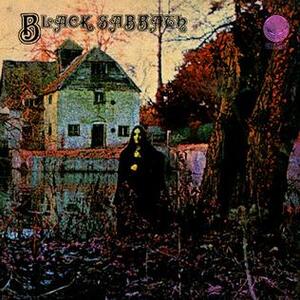
How it all came together... Black Sabbath's self-titled debut-album (1970)

Thanks for 2020 being what it is I didn't quite realise that this year marks the 50th birthday of our favourite music genre. Which is quite ironic really since pretty much from the start apocalyptic imagery is one of the defining themes in metal lyrics and artwork.

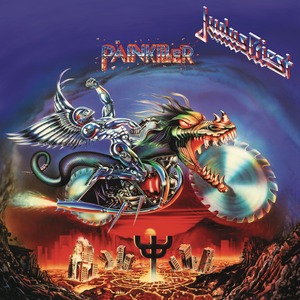
Probably one of the greatest pieces of escapism in music history ever: Judas Priest - Painkiller (1990)


I talked on this blog before about Black Sabbath's first two albums and what genre-defining significance their music had. And while there have been quite heavy sounding bands around before 1970, like Led Zeppelin, Deep Purple, Blue Cheer or Steppenwolf, none of them blended such heaviness in tone and rhythm equally dark and (for the time) edgy lyrical themes so consequential and compellingly.

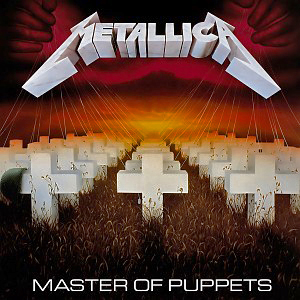
Of course I had to add Metallica. Luckily the motive really fits. Master of Puppets (1986)


The Guardian
published a compelling essay about their album Paranoid and I feel I don't have much to add to it, without sounding like I just repeat what they had to say. Therefore, instead of a retrospective, lets have a look at the present - and maybe a little into the future of metal in general too. Over the last 50 years the genre did branch out into countless genres and subgenres, some of them quite narrowly defined and surprisingly traditional. Overall a lot of the metal today feels - pretty much since the 2000s - rather stagnant and often quite bland. Too many bands that try to hit a bigger audience sound very safe and streamlined. The way the music industry today works may play a role here, but as a metal fan who likes the genre for its boldness, stark contrasts and strong emotions it can express, this just feels so wasteful when there is just another... product.

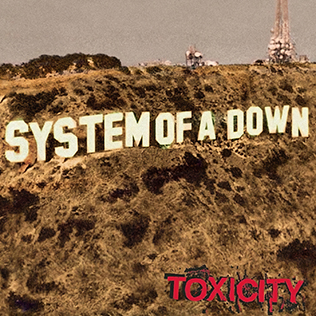
Definitely not just another product. System of a Down's Toxicity (2001)


On the other hand though, the abundance of cheap, good quality equipment and software offers possibilities like never before in the history of music. Any bedroom artist on a tight budget can now access better tools and equipment than professional studios had just a few decades ago. Just go and visit bandcamp. It might not be the most popular choice for listening to music, but what does popularity say anyway? There are tons of exciting bands out there that still radiate that uncompromising, dark and raw feeling that made me simply love metal. Bands that try something new, mix genres and just go for it, without the pressure of hitting a certain target audience or whatever. Bands that just want to make their music.

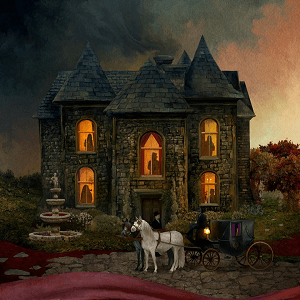
One of the progressive metal bands that actually is progressive: Opeth - In Cauda Venenum (2019)


Metal might not be as big in the mainstream as it has been in the 80s for example, but that doesn't has to be a bad thing. Not every successful album of that era was necessarily a good one. Streamlined, target audience-focused music isn't a recent invention. To me, metal being more of a niche-genre today is actually a good thing. Its still big enough to draw large crowds to festivals (well, maybe not in 2020^^) and sites like the aforementioned bandcamp, soundcloud or Youtube (yeah, Spotify is missing in this list. I don't use Spotify.) together with small independent record labels offer good platforms for new and exciting bands to be heard. I also wonder how much the current social-distancing-situation will inspire people to pick up an instrument. Like with other music equipment, they have never been that good for that little money.

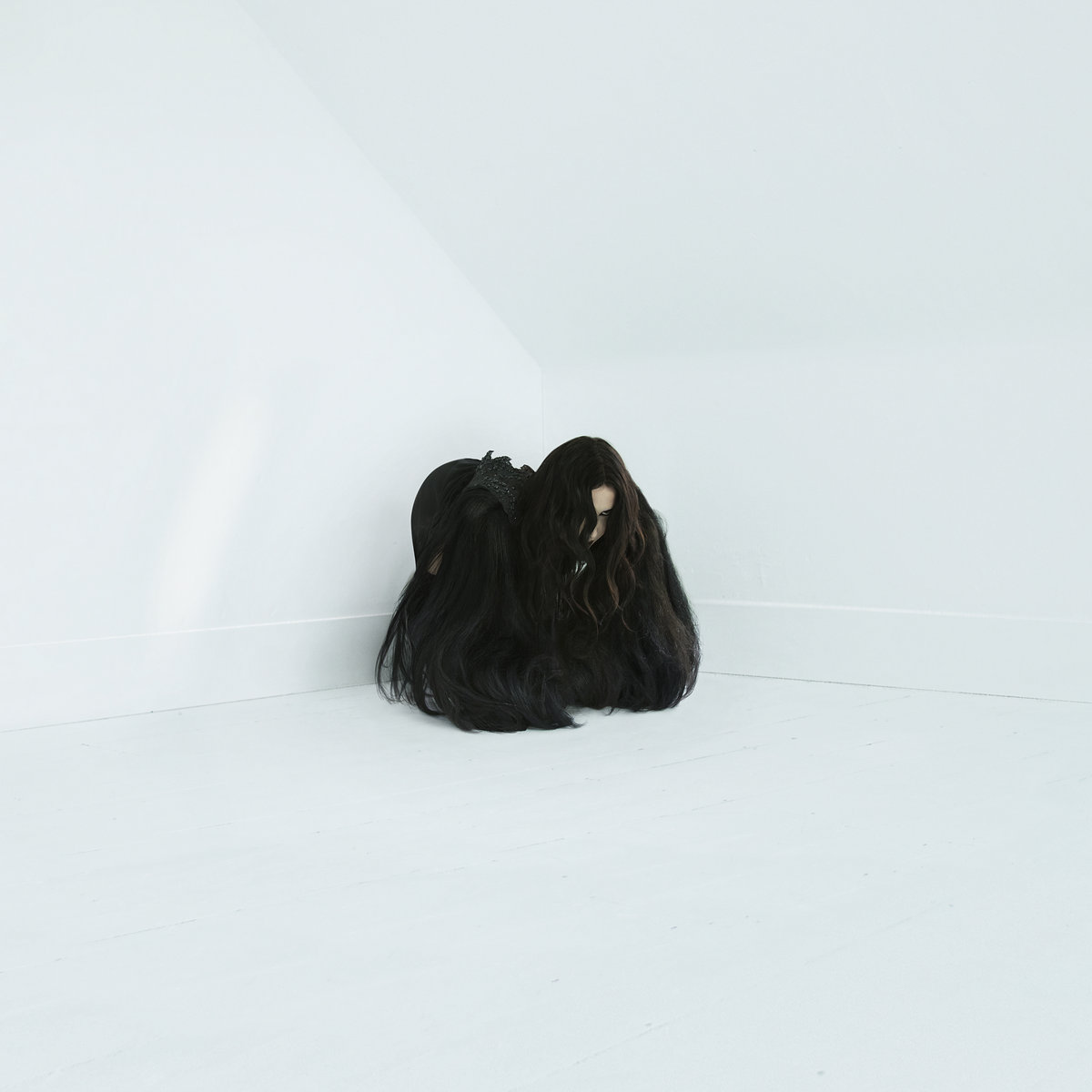
Folky, experimental doom metal. Chelsea Wolfe - Hiss Spun (2017)


So yeah, its not all doom and gloom for metal (pun intended!). Far from it, actually. There are still plenty of diamonds to discover in the dirt. You might have to dig a little to find them, but its worth it.

Sonntag, 1. September 2019

Tool - Fear Inoculum (2019)


Yay! Finally a review of a current album! Something I wasn't sure if it would ever happen, and featuring an album by Tool. Something I wasn't sure if that would ever happen either - but here we are!

I always had a rather distant relationship to Tool. Most of their songs are a bit too 'cerebral' for my taste, with their machine-like precision, polished sounds and complex rhythms. I usually prefer dirt and spontaneity instead of too much perfection.

Well good news, if you are like me then: Fear Inoculum feels definitely more dirty than its predecessors, which I find helps a lot getting access to their music. At times they did remind me actually quite a bit of Baroness or Mastodon. This said. Tool of course stays Tool, and sounds like Tool. The band also hasn't dropped any of their complexity or darkness. The production just feels a bit less cold and more dynamic this time around.

The songs are, with the exception of a handful 'breather'-tracks, all above ten minutes. Quite naturally this means the album doesn't unfolds easily. To the contrary: it is full of buildups, mood- and tempo changes and a lot of dynamic - definitely an album that wants to be discovered. I had it running almost constantly over the weekend and I can't honestly say that it hasn't revealed everything yet. It probably takes a longer time-span of repeated careful listening to get behind it - and that's great!

For somebody like me, who isn't their greatest fan, I am quite surprised that Fear Inoculum has actually quite a lot to offer. It isn't the typical stuff I'm listening to, but I find the album very appealing and quite - hypnotic. It shows great skill without being lost in virtuosity while at the same time has this atmosphere of an H.R. Giger painting: A surreal biomechanical landscape you cannot help but explore.


Samstag, 4. August 2018

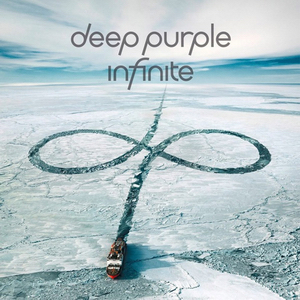
Deep Purple - Infinite (2017)


Not many bands can still surprise, or even excite you after they have been around for almost 50 years. When listening to Infinite, Deep Purple's most recent album, I knew for sure: they can.

The album kicks off with Time For Bedlam. Such a dark and irresistibly pressing song, that's on a level with some of their best and most intense material, like Perfect Strangers, Child in Time, or Rapture of the Deep. A vision of brutal suppression and resistance, perfectly crafted, like a Hieronnymus Bosch painting of hell. Ian Gillan's clerical chanting in the beginning, declaring that he is "descending the cold steps of the institution for the political insane - never to be seen again", building up tension, then the rest of the band kicks in and sending the song off with claustrophobic intensity - a textbook example of how to throw its listener right into the action.

May the rest of Infinite be not quite as gloomy and dramatic, it stays quite heavy, with the relaxed and confident playfulness of a band that feels free and fully in its equilibrium. The result are songs which are fresh, witty and flow so naturally and groovy that its simply a pure joy to listen to.

From the light-hearted, and slightly self-deprecating hymn Johnny's Band about the rise and fall and eventual muddling on of a rockband (with a hilarious promo video), to the tender and melancholic The Surprising and stomper like Hip Boots or Get Me Outta Here - Infinite is overboarding with strong performances. There isn't really a song you could call a filler... except the last one: The Doors cover Roadhouse Blues, which is just unnecessary and misses the feel of the original, without adding anything new and relevant to it.

Even with that little lapse, Infinite is one of the band's strongest albums. Like the last couple of releases, it shows that even a band that has been around for so long, still can be inventive and wild and write songs where you keep on discovering something new. Brilliant stuff!

Who knows for how much longer Deep Purple will still be around, but at least, If Infinite is really going to be their last record, then they end their long and spectacular career on a high note.


Samstag, 28. Juli 2018

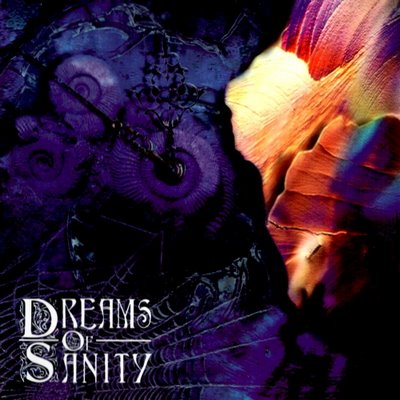
Dreams of Sanity - Komödia (1997)


This one might just be another case of "brilliant albums you may have never heard of". Released in 1997, so just over 20 years ago, Komödia was the first full length album of the Dreams of Sanity, after having recorded a couple of demos before, and you wouldn't know it from just listening to it.

Komödia is a beautiful and complex album, with a refinement that is just remarkable. Especially for a debut. And on top of it all it's subject matter is nothing less than one of the greatest works of world literature: Dante Alighieri's Divine Comedia from 1320. An epic poem describing the journey of a wanderer, guided by the Roman poet Virgil, through hell, purgatory and eventually heaven on the search for his lost love, Beatrice.

Clearly, you can't blame Dreams of Sanity for a lack of ambition and, of course, when you aim that high, the chances of failure are quite substantial too. The band however masters their set task brilliantly, with confidence and excellent ideas. A really classy performance, especially by the vocalists, who contribute a lot with their expressive, nuanced performances.

To me Komödia has as much in common with a classical symphony, or opera as it is a metal album. And quite extraordinary in how it brings both together. It is rich and complex, without being too academic, features nuanced and stunningly beautiful songs without drifting off into kitsch-regions, is technically impressive, but never forgets to play for the song, not over the song - its no coincidence really that I still find this album so appealing and interesting after all those years.

Dreams of Sanity would release two more albums, Masquerade and The Game, before they split in 2002 after several line-up changes. A pity they never got the recognition they deserved.


Mittwoch, 25. Juli 2018

The Gathering - Mandylion (1995)


When I showed the record a friend once, who had no idea about the band, he remarked that "this looks like classical music", I think this spontaneous, and not really qualified, assessment is actually quite suiting. This is miles away from mainstream rock and metal. In fact, it is not a trivial question where to put The Gathering really. A fact, which I find actually quite delightful. Is it gothic? symphonic? prog? All of the above? Does it matter?

Anyway, I discovered the band while everyone else was into stuff like Nightwish (once again I dutifully did exactly what everyone else wasn't doing). Goes without saying that I was appealed by the more edgy and experimental sound of The Gathering, despite being quite "symphonic" in their own way. They music is without a doubt quite heavy and dark, almost wagnerian at times, while it also shows some (for the genre) unusual instrumentation and airy colourfulness, creating an interesting and appealing mix.

I find it always fascinating to see the development some bands go through and The Gathering are a good example for a band that changed quite a lot over the years. They started in the late 80's as a doom and death metal band, yet as of Anneke van Giersbergen's arrival in the band for Mandylion, their sound has distinctively and lastingly changed and dramatically expanded its scope.
And certainly, her expressive voice fits ideally to their music. Not as sweet and angelic as so many other female symphonic metal singers, but with an edginess that happily deviates from the norm and works well with the band's overall experimental-attitude.

Still, certain elements still hint to their past. Especially the guitar work: heavy riffing with long held power chords and melodylines is certainly doom-influenced. Interestingly the result is actually quite Pink Floydian as well. Just think Dogs of War and Sorrow.

In later albums, starting with How to Measure A Planet, they began to abandon their metal roots more and more and moved towards a experimental, sometimes ambient-like direction. Something the band itself described as trip-rock - undeniably a quite suiting term.

Mandylion is a colourful, highly enjoyable album. Beautifully composed and executed. It shows a band able of writing songs that are complex and varied on the one hand, but at the same time catchy and beautiful.
The Gathering might not be everyone's taste, but in a genre like metal, with so many conventions and stylistic uniformity, an album like Mandylion is a more than welcome departure from the norm. It's actually quite needed.


Mittwoch, 18. Juli 2018

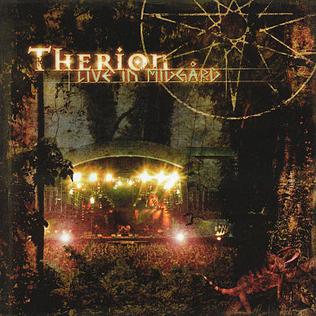
Therion - Live in Midgard (2002)


Some albums, I admit, didn't quite got my approval on first listening. Live in Midgard is probably the best example for this. I bought it around its release back in 2002 or '03, put it into my CD player, and didn't touch it again for years.

I can't tell for sure why, maybe I was just looking for something else around that time, or the music did simply overwhelm me (more about that later). Fact is that I discovered the song Wine of Aluqah on a gothic metal compilation, instantly liked it, recognized the name of the band, got the album - and wasn't impressed.

Anyway, what ever led to my initial rejection, I can't relate to it anymore and today Live in Midgard is amongst my favourites of the genre.

The album was recorded in 2001 during their Secret of the Runes-Tour and features a variety of different concert venues in Colombia, Germany and Hungary. While this could have resulted in a bit of a disjointed experience, the opposite is the case really. The whole album is a coherent and organic thunderstorm of sound that is just spectacular. Such power and dynamic! It combines the rawness of metal perfectly with the sensibility of classical instruments and vocals. I can't really name any other recording that deserves the term symphonic metal more than this.
Ironically though, compared to other bands of the genre, Therion remains at the same time probably the least accessible. Their songs are not really written for the charts, like say Nightwish does and therefore usually don't have singles-quality. And maybe that's just the reason why I value them so highly. Its so easy in the genre to fall into the trap of kitsch, Isn't it?

As much as I like their songwriting, I find Therion's studio-albums often a bit sterile and overproduced. Everything sounds pitch perfect and tidy, but the spirit of the moment just refuses to show itself. Not this record though. It is very well produced, but also keeps the dirt and the immediate dynamic of a live performance alive and definitely kicking.

Despite the norse-mythology-related title (and the title of the tour), Live in Midgard doesn't features overwhelmingly many songs from their 2001 album Secret of the Runes, but a healthy mixture of tracks from their past as well. The setlist reaches as back as their earliest, death/doom metal material, like A Black Rose, Beauty in Black, Wings of the Hydra and ("the fucking") Riders of Theli and includes the song Seawinds, a relatively obscure title from Accept. There is even some ABBA thrown in with the song Summer Night City. Believe it or not!

This said, the album isn't the most diverse, Therion stays Therion - and that means epic, relatively complex metal. And plenty of that. It is very much an all-out attack on the senses, with just a few breathers in between. Maybe it was this intensity, that kept me away from it initially. You certainly have to be in the right mood to enjoy this album in its entirety.

All in all, Live in Midgard is truly an experience. A dense and compelling tour de force. A operatic thunderstorm that leaves the listener saturated with sound. Not an easy listen for sure and probably not really recommendable for newbies, but highly enjoyable if you like epic symphonic metal that is maybe a bit edgier than what you usually get.


Freitag, 6. Juli 2018

Uli Jon Roth - Under A Dark Sky (2008)


Ok, this one didn't made it easy for me, but in the end it was quite enjoyable to write this review.

Uli Jon Roth, former lead guitarist with the Scorpions (long ago, back in the day when they were quite progressive and actually cool) has quite the reputation as guitar virtuoso and eccentric (which is quite an achievement for itself in the rock/metal genre), so its wise to expect the unexpected.

I like the basic idea of Under A Dark Sky: A concept album as a commentary on mankind's self-destructive ways, which eventually could lead into a catastrophe. That's always a winner for me.
The result though is a mixed bag. Between the highs of real greatness and the lows of utter kitsch.

To give you an impression: The album begins quite strongly with the track S.O.S., and - true to its subject matter - the sound of air sirens, morse-code and several voices declaring red alert building up a dramatic, film-score-like atmosphere. The voices are getting answered by a choir demanding "save our souls", underlined by a dramatically ascending electric guitar solo, before it falls into a shy, bittersweet melody.

All in all a very captivating start, but sadly a lot of the following material can't keep up and meanders somewhere in the acoustic no-man's land between operatic/musical orchestration and kitschy new-age tunes. With a good measure of virtuoso electric guitar solos thrown into the mix.

The tragedy is that there is certainly no doubt about Roth's skills as a musician. It is all wonderfully arranged and played, with some blisteringly beautiful solos. Same applies to his guest musicians.
It's more that, with all his theatrics, his taste fails him. His musical language is quite specific and the line between effective theatrics and simply kitsch is very thin - too thin for him. It's something I noticed in his other solo-works before: They are always displays of blistering playing technique, but when it comes to making use of it in a dramatic sense, it too often becomes comical instead of captivating.

Lyrically its a similar picture: The mix of English lyrics with German bits and pieces thrown in just feels quite artificial and over the top. It could have worked better if he had used them in more moderate doses. Which brings us back to the main problem of him as a musician: Uli Jon Roth wants too much. He is releasing all stops, puts everything into his music, shoots the moon and - misses.

I think its fair to say that Uli Jon Roth isn't quite on the same page as most of the rock and metal world. That's in theory not a bad thing at all, since most is pretty formulaic and uninspired, but sadly the alternative he brings up can't fully convince either.

This doesn't means the album doesn't has its good sides. It certainly has. In parts it is truly outstanding. It's absolute peak is the last track, Tanz in die Dämmerung (dance into the dusk), a monumental, almost 20 minutes long, epic. Dark and tense, starting slowly with some uneasy intervals played on Spanish guitar, and escalating into a wild frenzy. Mankind's dance into the catastrophe.
It end in sudden silence just when you would expect a resolution. Like a plug being pulled. In fact the songs ends so abruptly that some people thought their CD was damaged. A perfect metaphor of Roth's songwriting: instead of serving the expectations of his listeners, he surprises you with something unexpected. And here, instead of ending in a typical thunderstorm of noise, as so many bands would have done - there is nothing. Just as nothing would be left from us, if the big nuclear catastrophe strikes. A dance on the volcano - and then dead silence.

So despite its obvious weaknesses, I can't really condemn the album. It certainly has its highlights and grows on you with repeated listening. Keep in mind though that, if you expect anything like the Scorpions, get ready for a disappointment. Roth left the band in the late 70's and the music he made since certainly doesn't sounds like them at all. So better go into listening this record without any expectations or preconceptions. Its not going to be an easy, straightforward experience.


Samstag, 30. Juni 2018

Queen - Innuendo (1991)


It is possible to look at an album like Innuendo without the context of their singer, Freddie Mercury's illness and approaching death? Not for me. It is just shimmering through every song and note.

Queen's last record published in his lifetime is a foreshadowing, moving, theatric in the best sense, and graceful piece of music. Upbeat at time, almost defiantly so, especially in its faster songs, it however can't hide its sadness: the very human struggle with one's own mortality. Here is a singer who, facing the inevitable, literally sings for his life.

Framed by the majestic album-opener Innuendo and concluding with the emotional tour de force The Show Must Go On, the album is a kaleidoscope of tunes, themes and moods - each single one of them is strong, even captivating. There isn't any filler. From straightforward rockers like Headlong and Ride The Wild Wind, to the playful and carnivalesque I'm Going Slightly Mad, to fragile gems like Don't Try So Hard and Bijou - Queen covers such a wide variety with such masterful musicanship.

Innuendo is really Queen at their peak. And when the last note is ringing out and silence creeps upon you, you might feel a little lump in your throat. What a record!


Sonntag, 17. Juni 2018

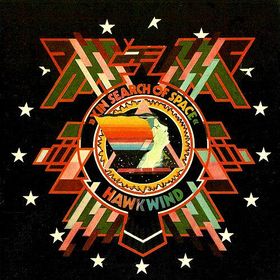
Hawkwind - In Search of Space (1971)


What a weird piece of music: Already the first track You Shouldn't Do That, that clocks in at about fifteen minutes, greets you with repetitive, chanting vocals, proto-stoner rhythm guitar and driving drums, like a spaceship racing on hyper-speed through the universe - and on top of all that is a saxophone! Welcome to Hawkwind! Welcome to In Search of Space!

And really, this is an astonishingly whimsical record. Not the most accessible, as you might have guessed by now, even with their hit-single Silver Machine included as bonus track. But all in all, certainly a captivating, even hypnotic melange of the LSD- and space-age aesthetics of their time.

If you like trippy music far away from the usual conventions, In Search of Space is definitely for you. Its maybe not quite on the level some of their later records, like Hall of the Mountain Grill, but still a strong piece of music with a lot of character and atmosphere.


Freitag, 15. Juni 2018

Iron Maiden - The Book of Souls (2015)


While many great bands of the 80s, if they are still around, are well past their creative zenith, live off their reputation from their "glorious old times" and haven't really released anything relevant in years, some bands just keep getting better and better.

I am glad to say that Iron Maiden falls into the latter category. Especially after seeing them live in the mid 2000s, where they delivered a smooth and polished, but essentially unexciting best-of-show. You know, the sort of show you do before you retire.

In this context, The Book of Souls was quite a surprise. Not only that the band is still able to write exciting new material, they also made serious moves into progressive-metal territory. I think this mix is the magic ingredient of this album really: songs that work as well on an emotional level as on a technical, songwriting one as well.

Despite the majority of the songs being well over six minutes long (and three of them over ten), they are all varied, engaging, keeping the listener interested - and deliver quite some punch.

The most outstanding song of the album is without a doubt Empire of the Clouds. An 18-minute long epic on the tragic maiden voyage of the Airship R101, that perfectly builds up from a dreamy piano-melody into the thunderstorm that eventually crashed it down - all carried by Bruce Dickinson's brilliant vocals and lyrics.

And the best of all of this? They achieve all this without abandoning the character of the band. This is still Iron Maiden; the band that wrote The Number of the Beast, Fear of the Dark, The Trooper - you name it. The new songs fit stylistically perfectly to their old material. They are simply enhanced, have grown and matured into - I won't say perfection, but they are pretty damn close.

Listen closely, guys from Metallica: That's how it's done.


Mittwoch, 13. Juni 2018

The Psychedelic Avengers - ...and the Decterian Blood Empire (2006)


This is probably the best band you have never heard of. The Psychedelic Avengers were founded in 2004 as a collaborative project of a number of artists and bands, the best known ones probably being Colour Haze and Vibravoid. I think their goal is best described with their own words on the back of their first album: 'This is the first psych-o-phonic, in-head science fiction b-movie for inner-eye-listening pleasures, which is being transvisualized via the soundtrack to your very own imaginary space, psych, teen, mutant, love, trash, porn, noize sci-fi movie'. And yes, its really all that!

The songs usually feature lengthy, pulp-inspired titles like 'The discovery of the lost transdimensional time-space vortex on the iceplanet of Vistar 7' (and that's not even one of their weirdest) and are colourful mixtures of stoner, psychedelic and electro, combined with radio-play like sequences to drive the story ahead. The result is more than compelling.

Be it the tranqulity of space, trippy warp-jumps, radio broadcasts from deep space, or tense battle-scenes - the Psychedelic Avengers are utterly immersing and entertaining. So many different moods, so many different musical worlds to discover.

From the two albums they released, their second ...and the Decterian Blood Empire is the more refined and coherent one. The tracks are more focused, with the overarching storyline of the peaceful civilisations of the Galaxy having to defend themselves against the... you guess. it. The album doesn't gives up any of its inventiveness and diversity though. It just flows and takes you on a wild ride through the ups and downs. An amazing "Space Opera" in the sense of the word.

A pity the Psychedelic Avengers disappeared into obscurity (or into the depths of space) after this album. They really created a masterpiece I love listening to again and again.

As if to prove how obscure this album is, there is only one song from it on Youtube:


Mittwoch, 6. Juni 2018

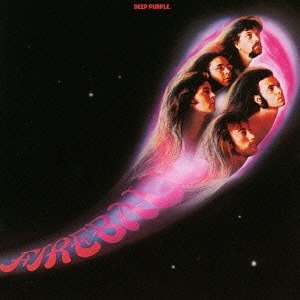
Deep Purple - Fireball (1971)


Fireball doesn't have it easy. As follow-up album to In Rock, Deep Purple's immensely successful, all-out-assault on the audience's hearing, it probably met the wrong expectations. Despite its fast namesake opener (and probably one of the very first times in rock history to feature double-bass drumming), it is a much more nuanced and varied affair.

Bluesy rock 'n' roll elements can be found here just as well as progressive spacerock-tunes. Hell, with Anyone's Daughter, even a country-song made it on the record - and it does good there!

If someone expected In Rock II however, that can only end in disappointment. In Fireball you can hear a band that doesn't needs to prove anything, but instead can experiment a little and extending their scope. The driving urge of its predecessor is gone and replaced by confidence and playfulness, without losing any of its heavyness - resulting in a brilliant, if slightly atypical album.

Its a pity that Deep Purple didn't pursue the direction they took with Fireball further. The next album, Machine Head, would become more restraint, and straightforward. Possibly reflecting the growing tensions within the band, which eventually led to their split in 1973 and a long painful road to disbandment a couple years later.

In this context, Fireball gives us a glimpse into the band Deep Purple could have been, if this line-up just had a couple more creative years. Who knows what amazing songs they would have made?


Montag, 4. Juni 2018

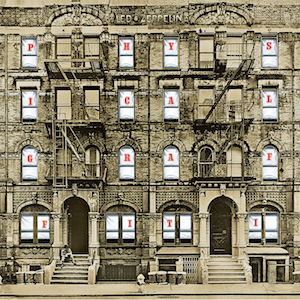
Led Zeppelin - Physical Graffiti (1975)


This album could have been so great. Houses of the Holy, Trampled Underfoot and the monumental Kashmir - three songs that alone would have guaranteed Physical Graffiti a masterpiece-status, if that would have been all there was.
Sadly they decided to make a double-LP, which meant that the other, roughly three quarters of the runtime had to be filled as well... somehow.

The result is a at times brilliant and exciting (as aforementioned songs document), at times terribly meandering and aimless record. Great material, like In My Time Of Dying get dragged out and swamped seemingly endlessly without any need. And its not doing the songs a favour really. A lot of the material on Physical Graffiti could have worked in half its run-time and maybe preserved more of its emotional impact in the process.
And that's the tragedy of this album: It shows that Led Zeppelin indeed could have lived up to their own standards with wonderfully crafted songs and their feel for melody and their distinctive inventiveness - just by far not often enough. The album as a whole is just way too rambling and meandering. One could think that half the time they just kept the tape recorder running and jammed along. A pity, since it makes Physical Graffiti feel uninspired and yes, tired.

At least this makes the few good songs in it really stand out: