Posts mit dem Label black sabbath werden angezeigt. Alle Posts anzeigen

Samstag, 26. September 2020

That strange beast Metal

Since its inception, metal remained a bit of an odd outsider in music. Loud, aggressive and extreme in its sound and imagery it is easy to dismiss as adolescent folly you eventually grow out of. Except when you don't.


Metal is... different

Because it sets itself apart so strongly from the majority of other styles, it is by default easy to misunderstand, avoid and straightaway dismiss. Its relatively easy to put together a top-50s-playlist for a party, that most people would get along with, despite it probably being composed of quite a variety of different styles. Generally speaking, you wont find lots of complex rhythms or lengthy instrumental passages or strong contrasts in dynamic or speed. Of course that's all the stuff is what actually makes metal so appealing!

Surely, not every metal song ticks all of these boxes, but by far and wide, metal has always been a bit of a more complex, or at least challenging musical beast (pun intended!), than the standard chart fare. It requires dedication from its listeners. Especially once you delved into its more obscure variants; some of you can call acquired tastes! Metal has a rich and cherished history, and a ton of genres and sub genres. In a sense its probably the best religion one can have!

Neurosis - Times of Grace (1999)


Not the cool kids

Right from its beginning, the relationship between metal and music critics - and actually society as a whole - has been a rather difficult one. Of course the critics 'didn't get it' when it came out and continued to dismiss or simply ignore it for a long time. The strong brush strokes of heavy guitar riffs and hard hitting drums made it too easy to dismiss as primitive, untalented and blunt. Still, metal found its fans in pretty much all parts of the world.


Black Sabbath - Sabbath Bloody Sabbath (1973)


I admit it feels weird to see bands like Black Sabbath, Iron Maiden or even an obscure underground formation like Electric Wizard or Mayhem suddenly getting featured in mainstream media sites. They even get positive reviews!
It literally took decades really until metal received some mainstream recognition and I wonder if its simply because it kept sticking around long enough and became part of life for so many people, so it could not be ignored anymore. And in the case of a band that has literally been around said decades, there is no way denying them their cultural significance.

Iron Maiden - The Book of Souls (2015)


Metal as a whole might still not quite be liked, or even understood, though. I also think this has a lot do with demographics. Metal never was the socially most accepted music and had always this underdog vibe to it. This working-class, biker, pub and open-air festival smell that is light years away from the hip urban clubs and concert venues, frequented by the typical middle-class music journalist. 

You want it darker.

Darkthrone - Under A Funeral Moon (1993)

The typical themes metal keeps coming back to probably haven't helped its cause either. Lyrics and artworks that deal with death, destruction, war, drug abuse, apocalypse, murder, insanity, corruption, etc - all those dark themes of society and life in general that doesn't makes it terribly appealing for the majority of people. Then again, its exactly this dipping into the dark side of things that's for a large part what makes metal so interesting. It doesn't pretends the world is all fluffy nice and sweet and good. Metal fully acknowledges that the world can be a cold and cruel place - and a lot of it is mankind's own doing.

Slayer - Reign in Blood (1986)

With this in mind, it isn't surprising that a lot of the inspiration that led to the creation of metal initially came from horror films and the way they play with stark themes and emotions like fear, anxiety and aggression in a controlled and safe way. In a way, this can be quite cathartic really. A crossing of boundaries that probably plays a significant role personal development towards adulthood. No surprise that both horror films and metal seem like naturally attractive to adolescent audiences.

Electric Wizard  ‎– Wizard Bloody Wizard (2017)

The flip side of this is the affinity to power fantasies, which are probably just as prevalent in metal. A lot of it is Tolkien or Robert E Howard-inspired, with lyrics full of glorious battles, manly men, mighty swords, heroic deeds and things like that. Deliberate escapism, cranked up to the maximum and often even further: deep into the realms of kitsch and comedy. Not everyone one's taste for sure, but then again - what is?


Blind Guardian - Nightfall In Middle-Earth (1998)


Who do you call Bastard?

Metal's influences are quite divers and at least partly surprising. There is of course hard/heavy rock, where metal directly evolved from. Especially bands like Led Zeppelin and Deep Purple had a big influence. Their hard, often fast, riff-based songs with extensive guitar solos and, at least in Deep Purple's case, a good measure of classical influences  have inspired generations of musicians. If you say hard rock, you have to say blues. It is inseparably part of the composition, rhythm and melodic language of all rock music. Often just speed and heaviness of the sound turned an old blues standard into a hard rock hymn. Just ask Led Zeppelin!

Deep Purple In Rock (1970) - Not quite metal, but highly influential.


Metal did a couple things different though: Heavier in tone; rhythmically and in its song structure more straightforward than its predecessor. Film music was another inspiration. The intense use of contrasting intervals to create tension, the theatrics and more strict composition than the often quite loose style you find it rock music. Metal was always more extreme. Pushing intensity and aggression further than their predecessors ever did.

Rock 'n' Roll, Metal, Hardrock? All of the above! Motörhead (1977)


The evolution of the equipment, especially the electric guitar, played a big role as well. The deliberate creation of distortion of the guitar signal in the 1960s, initially just an unwanted byproduct of increased volume in a tube amplifier, blew the doors into a new world of opportunities wide open. Soon effects were developed that allowed the player to modify the guitar tone even further. The guitar turned from a relatively tame and clear sounding instrument, heavily influenced in its tone by its acoustic predecessor, into a biting, screaming and growling beast. And the players able to control it, became heroes.


Sexy like a fallen angel: Jimmy Page in 1973


With those new possibilities in tone and volume, the playing style evolved too. Soon guitarists realised that, when distorted, relatively simple chord shapes (power chords) and single notes do sound a lot more interesting than when played clean. Notes also sustain a lot longer and even muted notes develop quite a notable, percussive 'chuck'. Soon amps that allow more gain got developed and pedals that made the guitar signal 'hotter' too, making distortion more controllable and further refining and expanding the range of possibilities. All these elements led to the development of new rhythmic and melodic ideas, that created the metal guitar sounds we know today. 


Metal is... so much!

Tool - Lateralus (2001)


Browsing through this little attempt in exploring the origins and the nature of metal, I feel that if there is one thing to take away from it, is that metal is indeed a quite unique cultural phenomenon. Surprisingly long-lived, with passionate, dedicated followers. It is a vast genre. Complex and emotional and speaks to our innermost feelings. Metal is more than just music. 


Mittwoch, 16. September 2020

Happy Birthday you loud and rude piece of music! (Metal exists for half a century now)

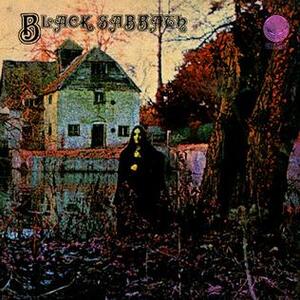
How it all came together... Black Sabbath's self-titled debut-album (1970)

Thanks for 2020 being what it is I didn't quite realise that this year marks the 50th birthday of our favourite music genre. Which is quite ironic really since pretty much from the start apocalyptic imagery is one of the defining themes in metal lyrics and artwork.

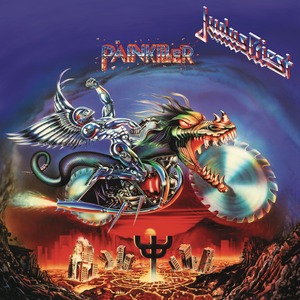
Probably one of the greatest pieces of escapism in music history ever: Judas Priest - Painkiller (1990)


I talked on this blog before about Black Sabbath's first two albums and what genre-defining significance their music had. And while there have been quite heavy sounding bands around before 1970, like Led Zeppelin, Deep Purple, Blue Cheer or Steppenwolf, none of them blended such heaviness in tone and rhythm equally dark and (for the time) edgy lyrical themes so consequential and compellingly.

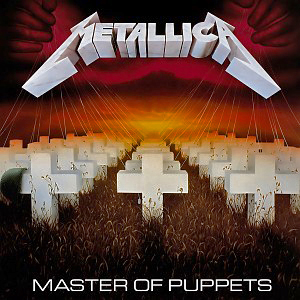
Of course I had to add Metallica. Luckily the motive really fits. Master of Puppets (1986)


The Guardian
published a compelling essay about their album Paranoid and I feel I don't have much to add to it, without sounding like I just repeat what they had to say. Therefore, instead of a retrospective, lets have a look at the present - and maybe a little into the future of metal in general too. Over the last 50 years the genre did branch out into countless genres and subgenres, some of them quite narrowly defined and surprisingly traditional. Overall a lot of the metal today feels - pretty much since the 2000s - rather stagnant and often quite bland. Too many bands that try to hit a bigger audience sound very safe and streamlined. The way the music industry today works may play a role here, but as a metal fan who likes the genre for its boldness, stark contrasts and strong emotions it can express, this just feels so wasteful when there is just another... product.

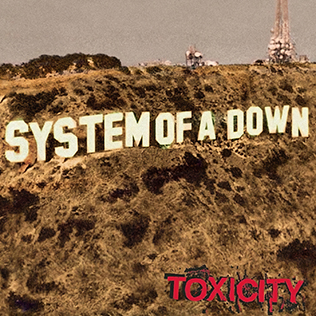
Definitely not just another product. System of a Down's Toxicity (2001)


On the other hand though, the abundance of cheap, good quality equipment and software offers possibilities like never before in the history of music. Any bedroom artist on a tight budget can now access better tools and equipment than professional studios had just a few decades ago. Just go and visit bandcamp. It might not be the most popular choice for listening to music, but what does popularity say anyway? There are tons of exciting bands out there that still radiate that uncompromising, dark and raw feeling that made me simply love metal. Bands that try something new, mix genres and just go for it, without the pressure of hitting a certain target audience or whatever. Bands that just want to make their music.

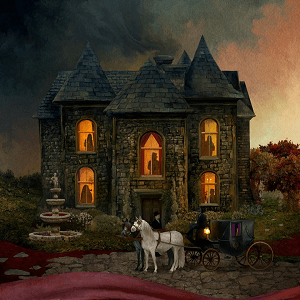
One of the progressive metal bands that actually is progressive: Opeth - In Cauda Venenum (2019)


Metal might not be as big in the mainstream as it has been in the 80s for example, but that doesn't has to be a bad thing. Not every successful album of that era was necessarily a good one. Streamlined, target audience-focused music isn't a recent invention. To me, metal being more of a niche-genre today is actually a good thing. Its still big enough to draw large crowds to festivals (well, maybe not in 2020^^) and sites like the aforementioned bandcamp, soundcloud or Youtube (yeah, Spotify is missing in this list. I don't use Spotify.) together with small independent record labels offer good platforms for new and exciting bands to be heard. I also wonder how much the current social-distancing-situation will inspire people to pick up an instrument. Like with other music equipment, they have never been that good for that little money.

Folky, experimental doom metal. Chelsea Wolfe - Hiss Spun (2017)


So yeah, its not all doom and gloom for metal (pun intended!). Far from it, actually. There are still plenty of diamonds to discover in the dirt. You might have to dig a little to find them, but its worth it.

Sonntag, 5. Mai 2019

Rainbow - Rising (1976)


Compared to its predecessor Ritchie Blackmore's Rainbow, Rising cranks it all up to eleven: the sword and sorcery, the heaviness, the complexity and length of the songs, the instrumental performances - it is basically the quintessential record of the Dio-era. Did the first album sound like the band was dipping their toe into a new world of hard guitar-centered music, in Rising they jumped fully into it.

Probably the best example is the epic Stargazer. Everything is larger than life in this song. A miniature-opera about the rise and (quite literal) fall of a wizard who enslaved the people to build him a tower to the stars. The way guitar and vocals are dramatizing the story here works so well and expressive and organic, with both being at the peak of their abilities, that its a pure, uplifting joy listening to.

Might the rest of the album not quite have the same epic dimension, with predominantly fast-paced songs, it is nevertheless spectacular. A good part of this is due to Cozy Powell's dense and varied drumming, which ties the songs together and works as a perfect counterpoint to the stunning performances of the albums main actors, Blackmore and Dio.

I think in hindsight you can see how influential Rising was to 80's metal: The breakneck guitar shredding, the fantasy-centered cover artwork and lyrics, delivered by an almost operatic vocalist and the occasional keyboard flavouring - all these bits became commonplaces in the decade after.
Its just a shame that the band initially wasn't too successful. About five years later, when the world was finally ready for this type of music and bands like Iron Maiden and Manowar filled the venues playing quite similar material, Blackmore had pushed Rainbow into radio-friendly territories instead. Luckily for us, Dio kept on waving the heavy-metal banner high. First with Black Sabbath and later as solo-artist with his own band.
All in all, Rising is definitely a milestone in the evolution of metal and an underrated masterpiece. And even the cover is less eye-watering than the first one!

Samstag, 25. August 2018

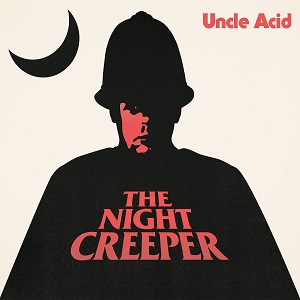
Uncle Acid & the Deadbeats - The Night Creeper (2015)


If you ever wondered, how it would have sounded, if Black Sabbath and the Beatles got merged together in some weird teleportation or cloning accident, Uncle Acid & the Deadbeats' The Night Creeper might give you the answer: Imagine Lucy in the Sky with Diamonds played with heavy riffing guitars, eery, distorted vocals and repetitive, hypnotic grooves. A gloomy psychedelic nightmare you may find, you can't get enough from.

Thematically, the album revolves around the eponymous Night Creeper, a Jack-the-Ripper-style serial killer. And it does it brilliantly. The way it transports its distinctive 60s-psychedelica-atmosphere, like an expressionist horror film inside your head. The haunting vocals, the Sabbath-like chord progressions and the very retro production - everything just plays together just brilliantly, creating a truly unique experience.

This said, Uncle Acid & the Deadbeats is certainly not everyone's taste and if you are into more conventional, or simply more modern metal, you might not enjoy them too much - for all the reasons mentioned above!

To me, Uncle Acid are one of the most significant discoveries in the recent years. Retro-doom at its finest, with a lot of emotional impact and their own, unique character. Not an easy thing to achieve, but they delivered brilliantly.


Samstag, 18. August 2018

Dio - Holy Diver (1983)


His stints at Rainbow and Black Sabbath catapulted the unknown singer Ronnie James Dio (born Ronald James Padavona), of the unknown rockband Elf up at the Mount Olympus of hardrock and heavy metal. After leaving Sabbath in 1982, he formed his own group the following year. Conveniently named Dio, after himself. And probably to ensure this time there are no doubts about who is its leader.

The new band basically picked up where he stopped. With straightforward fantasy-inspired heavy metal as it would become archetypical for the 1980s. Unlike the guitar-dominated sound of Sabbath or Rainbow though, with more emphasis on the vocals. And rightly so: Ronnie James Dio's voice is as distinctive as it is powerful. Together with Judas Priest's Rob Halford, he probably was the metal vocalist of the 80s. A singer you would recognize amongst thousands. So dynamic and yes, almost operatic in its range and power. Always giving that little extra emphasis, that is needed for proper heavy metal theatrics. He could sing your shopping list and make it sound like an tolkienesque-epic.

As brilliant as his voice was though, it would have been a waste if the other musicians weren't up to their task. And hell, they are. Guitarist Vivian Campbell's playing is in every sense a proper substitute for Ritchie Blackmore or Toni Iommi, without the danger of mimicry, and the rhythm-section, including Jimmy Bain on bass and drummer Vinnie Appice, who he snatched from Black Sabbath (where they recorded Mob Rules together), delivers a seemingly effortlessly brilliant performance. The whole album just marches ahead with straightforward classic heavy metal. Every fill, every riff and every solo spot on. Holy Diver feels like the band is playing together for a long time already. No surprise that quite a number of songs, like Holy Diver, Don't Talk to Strangers, Straight Through Your Heart and Rainbow in the Dark, became live-staples and are now regarded as heavy metal classics.

Musically, Holy Diver is of course not the most diverse of all records. It pretty much does what its cover-art promises. Well. not literally. Though, that would be quite something... Anyway. if you expect introvert subtlety, then you might have misunderstood the whole concept of heavy metal in the first place!

All in all, Holy Diver is epic 80's heavy metal at its finest and truly a must-know-album, that helped defining the genre. The band in this line-up would record two more albums, The Last in Line (1984) and Sacred Heart (1985), before descending into power struggles and instability. To me, these three albums mark the highlight of the band. Later albums still have their moments, but won't offer such an abundance of consistently strong material.


Mittwoch, 15. August 2018

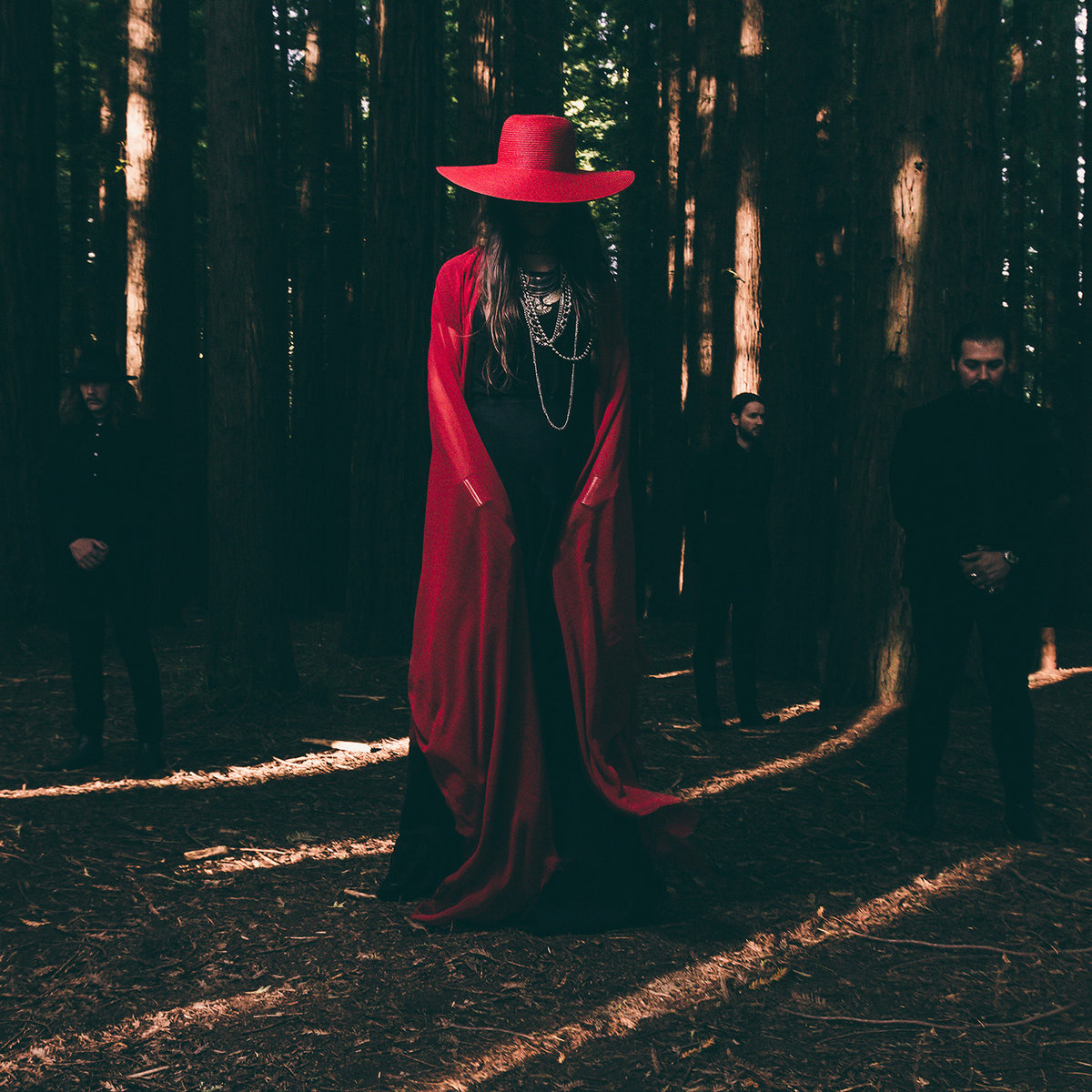
Devil Electric (2017)


Devil Electric are a recent discovery of mine. As the name and the cover picture of their debut album suggest, they are another example of the ever-growing Black-Sabbath-inspired, female-fronted proto-doom-occult rock genre. Phew, what a word! And while they certainly don't reinvent the wheel (or their genre), the quartet from Australia knows how to make some excellent, gloomy music.

On the instrumental side, Devil Electric are indeed closely resembling early Black Sabbath. With a lot of heavy,  fuzzy guitar, riffing on doomy intervals and accompanied by a rhythm section that stomps along like an iron behemoth with an impeccable sense of groove in its hulking limbs. So far, so good! Nothing revolutionary, but a very compelling performance. The really outstanding part however, that adds so much character to the band, is its vocalist.

With her bright, light-footed voice she often appears to dance above all the growling, heaviness the band unleashes. The result is - by all the contrast she adds to the sound - a nevertheless quite symbiotic feel, with interesting changes in rhythm and dynamics. It is this dance of contrasts that keeps Devil Electric, contrary to all the familiarity of their songs, varied and engaging - and a little bit unpredictable too. Very effective.

All in all, a strong debut with a lot of 60s- and 70s vibe. It could be the ideal soundtrack to a Hammer film. With misty graveyards, scantly clad witches and generous amounts of blood. Given the number of similar acts I sometimes wish they would stray away from the established, clichéd Black Sabbath-sound a bit more and experiment a bit more with their own style. The potential is certainly there.


Mittwoch, 11. Juli 2018

Black Sabbath - Paranoid (1970)


My first contact with Black Sabbath was through a German TV ad in the 90s, which used the song Paranoid for a quite silly recreation of that famous scene in Wayne's World. It wasn't even the original song but a pretty close cover version, which - in retrospect - seems quite fitting: play the pastiche of a cult song in a pastiche of a scene from a cult movie.

Anyway, I started my enquiries (luckily rock and metal is strong in my family) and after I learned song title and artists name, I went to a local record store, bravely ignored the rather stupid cover motive, bought the CD and well, music wasn't the same again after listening through this album for the first time.

While their first album is generally seen as the birth of heavy metal, thanks to their trademark sound* and gloomy subject matter, things really took off with their second album, Paranoid.
Released just months after their debut, you would maybe expect this record being an afterthought, but to the contrary: the amount of power and doom the band unleashes here is just spectacular and literally unheard of. With Paranoid the band definitely found their groove and cranked up the dials to elven!

Lyrically the album moved away from the supernatural/satanic imagery of songs like Black Sabbath or NIB towards a more gritty, real-life perspective, with the danger of the nuclear apocalypse (War Pigs, Electric Funeral), insanity (Paranoid, obviously) and drug addiction (Hand of Doom) being the overarching themes. And the album clearly benefits from this shift. It's songs still speak to us and possess a timeless, intimate quality.

The atmosphere of its lyrics resonates in the music itself: The bluesy-jazzy vibe of its predecessor is almost gone; exposing the bare bones of the bands heavy riffing and drumming. In fact, only the screaming, psycho-esque (you know, that shower scene) high notes in Iommi's soloing are a descendant of his jazz-influences. The result is a more condensed and focused record with no frills. And a pretty bleak one. The perfect soundtrack for the apocalypse and a how-to-guide for generations of upcoming doom bands.


*And lets be fair: neither of the other two big heavy rock bands of the early 70s, Led Zeppelin and Deep Purple, had that an uncompromising sound. So kudos to Sabbath for changing the game.

Mittwoch, 20. Juni 2018

Black Sabbath (1970)


There are barely more genres a single album is said to have originated than Black Sabbath's debut. I'm not going to list them all, but rock music definitely hasn't been the same since. Other bands might have experimented with heaviness in their sound as well, but the sheer amount of rawness and doom the first couple of minutes on this album evoke - for a big part thanks to Ozzy's haunted madman voice that brilliantly complements the instrumental part - were something new and literally unheard of. The band later said that their inspiration for their name and sound were horror films and well, it shows!

Beside all its heaviness - and there is plenty - Black Sabbath eponymous first album album also shows that they didn't fell from the sky as the band they are known as, but evolved into it. There are still some strong bluesy, even distinctively jazzy elements in their playing that were pretty quickly phased out in later songs. Especially in the second, more improvised half with Sleeping Village and The Warning have the feel of a heavy-rock-meets-jazz jam really, which actually works really well.

Another quite distinctive attribute this album has is its raw, unpolished sound, which has almost live-qualities. If we can believe guitarist Toni Iommi, and I do, the album has been recorded on a single day, with very few overdubs. Quite the opposite of what they would do just in a couple years time, where the studio sessions dragged on for weeks, even months.

Like many debut albums, Black Sabbath isn't as perfect and polished as their later work, but shows a band that has opened the gate to a new world. In the coming years they, and after them many other bands would step through this gate and continue upon what this album started.


Dienstag, 14. November 2017

G//Z/R - Plastic Planet (1995)


The first solo-album by Black Sabbath's Geezer Butler. A clumsy product trying to appeal to the 14 year olds of the mid-90s. No memorable riffs or melodies whatsoever. Instead too much cocaine and two-note vocals.