Since its inception, metal remained a bit of an odd outsider in music. Loud, aggressive and extreme in its sound and imagery it is easy to dismiss as adolescent folly you eventually grow out of. Except when you don't.
Metal is... different
Because it sets itself apart so strongly from the majority of other styles, it is by default easy to misunderstand, avoid and straightaway dismiss. Its relatively easy to put together a top-50s-playlist for a party, that most people would get along with, despite it probably being composed of quite a variety of different styles. Generally speaking, you wont find lots of complex rhythms or lengthy instrumental passages or strong contrasts in dynamic or speed. Of course that's all the stuff is what actually makes metal so appealing!
Surely, not every metal song ticks all of these boxes, but by far and wide, metal has always been a bit of a more complex, or at least challenging musical beast (pun intended!), than the standard chart fare. It requires dedication from its listeners. Especially once you delved into its more obscure variants; some of you can call acquired tastes! Metal has a rich and cherished history, and a ton of genres and sub genres. In a sense its probably the best religion one can have!
:format(jpeg):mode_rgb():quality(90)/discogs-images/R-3854515-1346996928-8961.jpeg.jpg) |
Neurosis - Times of Grace (1999)
|
Not the cool kids
Right from its beginning, the relationship between metal and music critics - and actually society as a whole - has been a rather difficult one. Of course the critics 'didn't get it' when it came out and continued to dismiss or simply ignore it for a long time. The strong brush strokes of heavy guitar riffs and hard hitting drums made it too easy to dismiss as primitive, untalented and blunt. Still, metal found its fans in pretty much all parts of the world.
:format(jpeg):mode_rgb():quality(90)/discogs-images/R-6018026-1519169212-8308.jpeg.jpg) |
Black Sabbath - Sabbath Bloody Sabbath (1973)
|
I admit it feels weird to see bands like Black Sabbath, Iron Maiden or even an obscure underground formation like Electric Wizard or Mayhem suddenly getting featured in mainstream media sites. They even get positive reviews!
It literally took decades really until metal received some mainstream recognition and I wonder if its simply because it kept sticking around long enough and became part of life for so many people, so it could not be ignored anymore. And in the case of a band that has literally been around said decades, there is no way denying them their cultural significance.
:format(jpeg):mode_rgb():quality(90)/discogs-images/R-7397750-1440622968-7258.jpeg.jpg) |
Iron Maiden - The Book of Souls (2015)
|
Metal as a whole might still not quite be liked, or even understood, though. I also think this has a lot do with demographics. Metal never was the socially most accepted music and had always this underdog vibe to it. This working-class, biker, pub and open-air festival smell that is light years away from the hip urban clubs and concert venues, frequented by the typical middle-class music journalist.
You want it darker.
:format(jpeg):mode_rgb():quality(90)/discogs-images/R-1078119-1363026815-2573.jpeg.jpg) |
Darkthrone - Under A Funeral Moon (1993)
|
The typical themes metal keeps coming back to probably haven't helped its cause either. Lyrics and artworks that deal with death, destruction, war, drug abuse, apocalypse, murder, insanity, corruption, etc - all those dark themes of society and life in general that doesn't makes it terribly appealing for the majority of people. Then again, its exactly this dipping into the dark side of things that's for a large part what makes metal so interesting. It doesn't pretends the world is all fluffy nice and sweet and good. Metal fully acknowledges that the world can be a cold and cruel place - and a lot of it is mankind's own doing.
 |
| Slayer - Reign in Blood (1986) |
With this in mind, it isn't surprising that a lot of the inspiration that led to the creation of metal initially came from horror films and the way they play with stark themes and emotions like fear, anxiety and aggression in a controlled and safe way. In a way, this can be quite cathartic really. A crossing of boundaries that probably plays a significant role personal development towards adulthood. No surprise that both horror films and metal seem like naturally attractive to adolescent audiences.
:format(jpeg):mode_rgb():quality(90)/discogs-images/R-11125520-1510331047-9932.jpeg.jpg) |
Electric Wizard – Wizard Bloody Wizard (2017)
|
The flip side of this is the affinity to power fantasies, which are probably just as prevalent in metal. A lot of it is Tolkien or Robert E Howard-inspired, with lyrics full of glorious battles, manly men, mighty swords, heroic deeds and things like that. Deliberate escapism, cranked up to the maximum and often even further: deep into the realms of kitsch and comedy. Not everyone one's taste for sure, but then again - what is?
:format(jpeg):mode_rgb():quality(90)/discogs-images/R-382748-1309701839.jpeg.jpg) |
| Blind Guardian - Nightfall In Middle-Earth (1998) |
Who do you call Bastard?
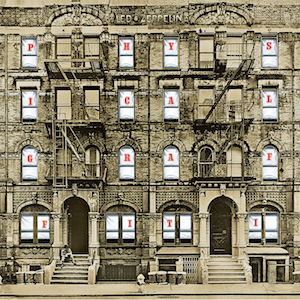
Metal's influences are quite divers and at least partly surprising. There is of course hard/heavy rock, where metal directly evolved from. Especially bands like Led Zeppelin and Deep Purple had a big influence. Their hard, often fast, riff-based songs with extensive guitar solos and, at least in Deep Purple's case, a good measure of classical influences have inspired generations of musicians. If you say hard rock, you have to say blues. It is inseparably part of the composition, rhythm and melodic language of all rock music. Often just speed and heaviness of the sound turned an old blues standard into a hard rock hymn. Just ask Led Zeppelin!
 |
| Deep Purple In Rock (1970) - Not quite metal, but highly influential. |
Metal did a couple things different though: Heavier in tone; rhythmically and in its song structure more straightforward than its predecessor. Film music was another inspiration. The intense use of contrasting intervals to create tension, the theatrics and more strict composition than the often quite loose style you find it rock music. Metal was always more extreme. Pushing intensity and aggression further than their predecessors ever did.
:format(jpeg):mode_rgb():quality(90)/discogs-images/R-6251072-1542260448-5628.jpeg.jpg) |
Rock 'n' Roll, Metal, Hardrock? All of the above! Motörhead (1977)
|
The evolution of the equipment, especially the electric guitar, played a big role as well. The deliberate creation of distortion of the guitar signal in the 1960s, initially just an unwanted byproduct of increased volume in a tube amplifier, blew the doors into a new world of opportunities wide open. Soon effects were developed that allowed the player to modify the guitar tone even further. The guitar turned from a relatively tame and clear sounding instrument, heavily influenced in its tone by its acoustic predecessor, into a biting, screaming and growling beast. And the players able to control it, became heroes.
 |
Sexy like a fallen angel: Jimmy Page in 1973
|
With those new possibilities in tone and volume, the playing style evolved too. Soon guitarists realised that, when distorted, relatively simple chord shapes (power chords) and single notes do sound a lot more interesting than when played clean. Notes also sustain a lot longer and even muted notes develop quite a notable, percussive 'chuck'. Soon amps that allow more gain got developed and pedals that made the guitar signal 'hotter' too, making distortion more controllable and further refining and expanding the range of possibilities. All these elements led to the development of new rhythmic and melodic ideas, that created the metal guitar sounds we know today.
Metal is... so much!
:format(jpeg):mode_rgb():quality(90)/discogs-images/R-367251-1175935223.jpeg.jpg) |
Tool - Lateralus (2001)
|
Browsing through this little attempt in exploring the origins and the nature of metal, I feel that if there is one thing to take away from it, is that metal is indeed a quite unique cultural phenomenon. Surprisingly long-lived, with passionate, dedicated followers. It is a vast genre. Complex and emotional and speaks to our innermost feelings. Metal is more than just music.


_front_cover.jpg)