Rainbow's third studio album and the last one with Ronnie James Dio. In retrospect, it's the end of an era: Blackmore, who usually changed almost the whole band lineup between albums anyway, would continue with almost completely new personnel into a much more radio-friendly direction, before eventually disbanding the band in favour of a (quite successful, yet ultimately doomed) reunion of Deep Purple. He would never again release as bold, aggressive and progressive music as he did in the second half of the 70s. What a pity!
Where Rainbow initially not that much liked, and didn't really drew large crowds to their concerts, in retrospect they are one of the defining bands of the emerging heavy-metal genre. Speed, precision, epic lyrics and operatic vocals underlining the classically inspired melodies - Rainbow got it all.
However, compared to their 1976 masterpiece Rising, Long Live Rock and Roll is often seen as the lesser record. I disagree. Rising might been more complex and longer, or more progressive, as one might argue^^ but its successor is just that bit more accessible and compact, has more memorable riffs and - thanks to its more diverse songwriting - feels more engaging. Rising might been a relentless full throttle-trip from start to finish, but Long Live... gives you that little breather from time to time that makes its punches hit you even harder when they come.
And gods, punches it gives. From its cheerfully kickass opening track to the mystical and oriental Gates of Babylon, to the speedmetal powertrip Kill the King, the album has some of the best songs and riffs the band (or Blackmore himself actually) has ever written. Just blisteringly played (and I'm sure some actual blisters were involved), with a vocal performance by Dio, that once again can only be compared to singers like Robert Plant, Rob Halford and Ro... Ian Gillan on top of their game.
It's a shame that this should be the last Rainbow album with Dio's involvement and the band's last straightforward hard-rock album, until 1995's Stranger in Us All. The albums after him were not bad, but too often too streamlined for chart-appeal and too restrained even in their wilder-moments. Luckily for us, Dio stayed true to his style, went straight to Black Sabbath, recorded two stunning albums there, before starting his own project in 1982.
A lot has been written about Ritchie Blackmore's departure from Deep Purple and the formation of his own project, Rainbow. That he de facto took over the band Elf, which was supporting Deep Purple while touring around that time and had a certain Ronnie James Dio on vocals... So I spare ourselves a more extensive recap. Instead, onwards to the meat and potatoes!
The album begins with Man on the Silver Mountain, which, surely not coincidentally, has some similarities to that one Deep Purple song everyone knows. Just like Smoke on the Water the main riff is played in fourths (quite a trademark of Blackmore and found in a lot of his songs throughout his career) and the song grooves confidently along in the mid-tempo range. Quite radio-friendly actually. But as similar the songs are, Ronnie James Dio's vocal performance adds a more dramatic and operatic vibe to it, than Ian Gillan does. Where Smoke on the Water muses on the very worldly events during the recording of Deep Purple's album Machine Head and even includes their exact location in its lyrics ("We all came out to Montreux..."), Man on the Silver Mountain is more cryptic and evokes mystic imagery and is located very much in fantasy-land. Or Middle Earth.
While there are some more typical rock'n'roll songs as well, namely Black Sheep of the Family and If you don't like Rock and Roll, they appear really as the weaker moments of the album. I often get the impression Blackmore isn't that comfortable playing blues or blues-based material and these songs are showcasing this pretty well. While they are technically flawlessly played, they sound maybe a bit too clinical for their own good. Maybe the band tried to emulate Led Zeppelin here. Not a bad attempt, but they just lack their swagger. And Zeppelin was all swagger really.
(I think Blackmore actually wanted Rainbow to be a mix between Led Zeppelin and Deep Purple, so there you go: Deep Zeppelin or Led Purple, take your pick.)
Luckily for the remainder of the album the band is very much speaking its own language and tries not to sound like anyone else. And to the benefit of the songs: the ballads don't try to be folky or something like that, as Zeppelin did before. Instead they take their inspiration from classical music and medieval tunes. After all, Blackmore is more a Bach- and Beethoven guy. Its quite funny to listen to songs like Temple of the King or Catch the Rainbow, realizing that twenty years before forming Blackmore's Night, he pretty much made already the same music!
Where the album really shines however, is in the hard and heavy end of the spectrum. Namely songs like Sixteenth Century Greensleeves and Snake Charmer. Here the epic fantasy can run freely: liberated from the limitations of 12-bar blues and straight into proto power-metal territory with Dio's heroic voice, heavy drumming, fast arpeggios and punchy riffs. Great songs which heritage can still be heard in today's metal.
As it is typical for a rock band of the 70's, especially with such strong lead personalities as Blackmore and Dio are, the rhythm-section - Craig Gruber on bass and Gary Driscoll on drums - stays consistently in the background. They certainly do a good job and give the songs a very naturally flowing feel while at the same time very competently delivering heaviness, but you can sense they are not the most important members of this band. Same applies to Mickey Lee Soule on the keys. At least he gets a bit of spotlight with his rock'n'roll piano in Black Sheep of the Family. But for vastly the largest part this album is very much a guitar-plus-singer album.
All in all, Ritchie Blackmore's Rainbow is a bit of a mixed bag. It certainly has great moments and historic significance. The two main protagonists Blackmore and Dio can really shine and show off their talents. On the other hand, it feels like the band hasn't fully explored their possibilities yet. Something that would change with their follow-up album Rising.
And yes, the cover is ghastly. As influential their music was, their choice of artwork sadly was so too.
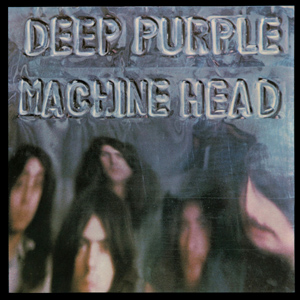
For many Machine Head is the best album of the Mk2 era. An opinion I never really shared. Sure it has Highway Star, Space Trucking, Lazy and - of course - their biggest hit, Smoke on the Water. A strong line-up of songs. But is it really? Let's have a look.
The opener, Highway Star, features a perfectly executed build-up and a machine-precise, driving groove in perfect interplay with vocals, riffing and spot-on neoclassical* soloing. Its a showcase piece of what this band was able to. I think you can't handle the subject matter more elegantly than with with Highway Star. An outstanding piece of music. Pure genius.
Other songs, like Maybe I'm a Leo, Pictures of Home and Never Before tell a different story though. Not that they are bad. They are all very well executed, but they don't excite or offer much memorable. Highway Star is a song that evolved and got perfected on stage, resulting in such a well-composed and exciting piece of music. The trio above, on the contrary, simply feels generic.
Ironically, Never Before was actually the song the band gave the most chances of being a hit single. It consequently has been released as one (with a much more captivating When a Blind Man Cries as B-side) and peaked at - #35 of the UK charts. So much for good judgement. I wonder if that's a sign of the band getting tired already of their Sturm und Drang-sound of In Rock and Fireball.
Smoke on the Water though, I guess I don't have to say too much about that one. Maybe just so much: its a really good song, no doubt. With a very catchy riff obviously. Overplayed? Definitely, Overrated? Maybe a little! Being consistent with their former decision with Never Before, the song was not released as a single. At least not initially. Only after radio stations picked it up, it was eventually released. In May 1973.
The two remaining songs on the original release, Lazy and Space Trucking are a cut above the trio Maybe, Leo and Never, but again not as inspired and captivating as you would expect from such a highly rated album. Lazy is, after a very tasteful keyboard-intro, basically a refined jam-session based a catchy guitar riff. Its really nice to hear the band grooving along. No doubt about that. They are so organic and precise - but that's just not enough to make a great song out of it.
And Space Trucking is in its studio-version maybe a bit too restrained to really take off, which is a pity, since everything seems to be in place: a really catchy riff (played with an Hammond organ via Marshall guitar-amps, actually), silly, catchy vocals and once again their superb rhythm-section. Blackmore has some good moments as well. Now, if that song would been a couple minutes longer, with a bit more experimentation...
So much for the original release on LP. Later versions of the album include When a Blind Man Cries. A song so touching and fragile that it makes me really wonder why it didn't make it on the album initially. Especially, since Machine Head stays well under the 40-minute mark without it. Maybe it didn't fit to their image to have a ballad, who knows. Then again, Fireball had Anyone's Daughter, and having one ballad as a little breather doesn't sounds like such a bad idea to me, if there is so much space for off-the-shelf rock songs on this record.
In the end, Machine Head lives from a couple outstanding songs, with some generous padding by mediocrity. In terms of creativity and excitement it can't reach Fireball, or In Rock, which were daring and have their sparks flying so much more than this record. On the other hand, Machine Head is more focussed and compact and maybe a bit more radio-friendly this way. The sound has also improved quite notably compared to its predecessors, being nicely crisp and transparent.
Overall its still a good album. Maybe not as inspired as it could be, but listening to a band that plays so well together like Deep Purple makes it still a quite enjoyable thing.
Deep Purple was never free of conflicts. At least not for long. Strong egos, touring stress, diverging creative ideas and their rocketing success in the early 70s with all its consequences (as in drugs, more touring stress and ever bigger egos) - that's all not really de-escalating factors. Ironically, their most creative (and successful) line-up is at the same time the one which probably was the most tense. Of course we are talking about what is known as Deep Purple Mk.II. Originators of masterful albums like In Rock (1970), Fireball (1971) and Machine Head (1972).
With the (involuntarily) departure of Ian Gillan and Roger Glover on the peak of the band's success in 1973 and Blackmore leaving two years later (frustrated, but voluntarily), Deep Purple went into a steady decline and eventually - in 1976 hit rock bottom and fell apart unceremoniously.
In the years afterwards, each member went on to boldly pursue his own projects he never had time for while being in Deep Purple. Well... not really. Jon Lord and Ian Paice found themselves playing several years together in Whitesnake, the band of Gillan's replacement, David Coverdale, which - at least in Lord's case - was more a vacational arrangement than anything else. Roger Glover eventually joined Ritchie Blackmore's Rainbow in its commercial successful radio-rock, post-Dio-phase. Only Ian Gillan was really doing solo-projects (amongst with losing a lot of money in bad investments).
Anyway, at least in retrospect it seems they couldn't really stay away from each other for too long, doesn't it? So in 1984 their reunion eventually happened. Having big cheques waved at them by their record company certainly helped a bit as well.
But enough of the foreplay. How well does the record actually hold up, I hear you ask? Ok, since you ask me so directly: Its amazing!
The album starts off subtly with a sneaky keyboard-intro before building up to the groovy and relaxed rocker Knocking at Your Back Door. Already at this point you know, this is going to be good. All the ingredients which make Deep Purple what it is are back together in perfect harmony. Those typical Blackmore guitar-riffs and melodies, the unmistakable and elegant keyboard by Jon Lord, always there when you need it, but never pushing itself into the spotlight for the sake of it, the powerful Glover/Paice rhythm engine and those sleazy Gillan vocals (really, listen to those lyrics!) that fit to the sound of the rest of the ensemble so brilliantly that it's hard to imagine anybody else doing the job (well, certainly not Coverdale/Hughes).
For the second track, Under the Gun, the band is shifting up a couple gears. A tense and energetic song that wipes away all remaining doubts whether they still had their fire. With its simple, but superbly effective intro riff (in great symbiosis once again with the keys-section) it storms over you and takes you with it before you figured out what happened. Great song. One of my all-time favourites.
Nobody's Home and Mean Streak are similarly energetic and fast rockers and certainly excellent songs in their own right, but the monumental Perfect Strangers following them just steals the show here. What a song! Heavy and almost gothic in its dark and cold mood. Probably the archetypical Deep Purple song of the 80s and always a highlight played live.
After the moderately-paced epic named Perfect Strangers, A Gypsy's Kiss is picking up the tempo again and rushes through its classical-inspired melodies with breakneck-speed. I always associate it with rushing along a nightly road or through a tunnel. It just has this rushing, tunnel-vision-feel to it. Really captivating.
Wasted Sunsets, on the other hand, is musically the complete opposite. Slow-paced and melancholicly meandering, with some of the most beautiful guitar soloing you might encounter in a long while. So lyrical, so intense and heartbreakingly played. An absolutely brilliant song.
The album finishes (in the LP version) on a bit of a sentimental note with Hungry Daze. A restless rushing through scenes of their busy tour life - the aforementioned hungry days, when they were almost constantly either on the road or recording a new album. A good song with some blistering guitar-work once again.
The final final track is Not Responsible, which stomps along quite nicely but doesn't really goes anywhere. Not a bad song. Certainly not, but in company with all the greats on this record, it falls off a bit. At least it give you some additional four minutes to enjoy this brilliant, perfectly attuned band, before it fades out.
Sound-wise Perfect Strangers picks up on their album Machine Head and does a modernised interpretation on the crisp, cold and almost biting feel it had. This modernisation works really well and at no time like an artificial ahem... "enhancement", of albums like Yes' 90125 with its silly, seemingly randomly thrown in samples. Blackmore allegedly told his band mates to listen to it carefully for inspiration. Good job they paid attention to the right parts. Because you can doesn't means you should do certain things!
The production by Roger Glover on the other hand, who did a lot of Deep Purple-albums over time, is solid, but a bit too muddy. Other albums from around this time are clearer, punchier, so no chance of blaming 80s studio-technology there.
So despite the slight niggle here and there, which is like complaining that in the Himalaya not all mountains are the same, height, my verdict remains. Perfect Strangers is amazing. A spectacular reunion-album with sparks flying left and right and the good old Deep Purple motor firing happily from all its cylinders. As usual with this line-up, the peace didn't last forever (or longer than a couple of months!), but at least we got this wonderful album out of it.
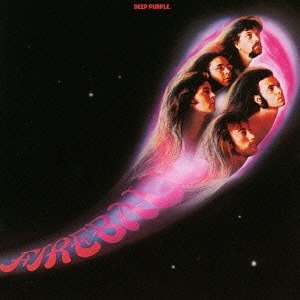
Fireball doesn't have it easy. As follow-up album to In Rock, Deep Purple's immensely successful, all-out-assault on the audience's hearing, it probably met the wrong expectations. Despite its fast namesake opener (and probably one of the very first times in rock history to feature double-bass drumming), it is a much more nuanced and varied affair.
Bluesy rock 'n' roll elements can be found here just as well as progressive spacerock-tunes. Hell, with Anyone's Daughter, even a country-song made it on the record - and it does good there!
If someone expected In Rock II however, that can only end in disappointment. In Fireball you can hear a band that doesn't needs to prove anything, but instead can experiment a little and extending their scope. The driving urge of its predecessor is gone and replaced by confidence and playfulness, without losing any of its heavyness - resulting in a brilliant, if slightly atypical album.
Its a pity that Deep Purple didn't pursue the direction they took with Fireball further. The next album, Machine Head, would become more restraint, and straightforward. Possibly reflecting the growing tensions within the band, which eventually led to their split in 1973 and a long painful road to disbandment a couple years later.
In this context, Fireball gives us a glimpse into the band Deep Purple could have been, if this line-up just had a couple more creative years. Who knows what amazing songs they would have made?
For many, In Rock is Deep Purple's de-facto debut album, despite the band being already around for a while and having released 3 studio albums and a recording of their Concerto for Group and Orchestra. But by all means, In Rock is the record where they finally got their act together!
Prior to it the band was stuck in a creative limbo somewhere between aping Vanilla-Fudge-style psychedelica and playing with string quartets. You can argue about the former being a good idea or not, but the latter is for itself certainly not a bad thing at all. Alas, the band didn't feel really at home with the music they were making. Its not like their songs of that era were bad. Not at all. Unfocused maybe at times, but played at a high standard of song-writing and musicianship. It was maybe just a bit too cerebral and melodramatic to really grab you.
A change in line-up (Ian Gillan replaced Rod Evans as singer, and Roger Glover took over bass-duties from Nick Simper) brought finally a shift in direction towards the more condensed, no-frills heavy rock-style of In Rock. And indeed it sounds like this is a different band. Sure, you recognize the musicians and their individual styles if you listen closely, but the end result is just so staggeringly different. In Rock is almost brutal in its directness and sheer noise. At the same time its very groovy too, but like heavy machinery running at high speed: with an undeniable urge and density. A captivating, even radical performance that takes you for an exciting flat-out ride, leaving their past works behind in the dust.
This said, the album isn't the most diverse. With the exception of the monumental Child in Time, the songs are pretty straightforward and mostly tend to be either fast and heavy or slow and heavy. Not a bad thing really. It makes in Rock a coherent experience, saturating its listener in sound. The album is one of the earliest, defining moments of hard/heavy rock music; it doesn't has to be all polished or refined. To the contrary: its raw, uncompromising nature is what inspired generations of bands after them to do their own thing.
Listening to it in 2018, In Rock still excites me. Yes, you can hear its age. It sounds very late 60s, early 70s, but looking at how many bands are trying to emulate a retro-sound and look, that's not really a bad thing. And the album still excites. The sheer energy and playfulness of the band is just as present as when In Rock came out.


_front_cover.jpg)
.jpg)