Samstag, 26. September 2020

That strange beast Metal

Since its inception, metal remained a bit of an odd outsider in music. Loud, aggressive and extreme in its sound and imagery it is easy to dismiss as adolescent folly you eventually grow out of. Except when you don't.


Metal is... different

Because it sets itself apart so strongly from the majority of other styles, it is by default easy to misunderstand, avoid and straightaway dismiss. Its relatively easy to put together a top-50s-playlist for a party, that most people would get along with, despite it probably being composed of quite a variety of different styles. Generally speaking, you wont find lots of complex rhythms or lengthy instrumental passages or strong contrasts in dynamic or speed. Of course that's all the stuff is what actually makes metal so appealing!

Surely, not every metal song ticks all of these boxes, but by far and wide, metal has always been a bit of a more complex, or at least challenging musical beast (pun intended!), than the standard chart fare. It requires dedication from its listeners. Especially once you delved into its more obscure variants; some of you can call acquired tastes! Metal has a rich and cherished history, and a ton of genres and sub genres. In a sense its probably the best religion one can have!

Neurosis - Times of Grace (1999)


Not the cool kids

Right from its beginning, the relationship between metal and music critics - and actually society as a whole - has been a rather difficult one. Of course the critics 'didn't get it' when it came out and continued to dismiss or simply ignore it for a long time. The strong brush strokes of heavy guitar riffs and hard hitting drums made it too easy to dismiss as primitive, untalented and blunt. Still, metal found its fans in pretty much all parts of the world.


Black Sabbath - Sabbath Bloody Sabbath (1973)


I admit it feels weird to see bands like Black Sabbath, Iron Maiden or even an obscure underground formation like Electric Wizard or Mayhem suddenly getting featured in mainstream media sites. They even get positive reviews!
It literally took decades really until metal received some mainstream recognition and I wonder if its simply because it kept sticking around long enough and became part of life for so many people, so it could not be ignored anymore. And in the case of a band that has literally been around said decades, there is no way denying them their cultural significance.

Iron Maiden - The Book of Souls (2015)


Metal as a whole might still not quite be liked, or even understood, though. I also think this has a lot do with demographics. Metal never was the socially most accepted music and had always this underdog vibe to it. This working-class, biker, pub and open-air festival smell that is light years away from the hip urban clubs and concert venues, frequented by the typical middle-class music journalist. 

You want it darker.

Darkthrone - Under A Funeral Moon (1993)

The typical themes metal keeps coming back to probably haven't helped its cause either. Lyrics and artworks that deal with death, destruction, war, drug abuse, apocalypse, murder, insanity, corruption, etc - all those dark themes of society and life in general that doesn't makes it terribly appealing for the majority of people. Then again, its exactly this dipping into the dark side of things that's for a large part what makes metal so interesting. It doesn't pretends the world is all fluffy nice and sweet and good. Metal fully acknowledges that the world can be a cold and cruel place - and a lot of it is mankind's own doing.

Slayer - Reign in Blood (1986)

With this in mind, it isn't surprising that a lot of the inspiration that led to the creation of metal initially came from horror films and the way they play with stark themes and emotions like fear, anxiety and aggression in a controlled and safe way. In a way, this can be quite cathartic really. A crossing of boundaries that probably plays a significant role personal development towards adulthood. No surprise that both horror films and metal seem like naturally attractive to adolescent audiences.

Electric Wizard  ‎– Wizard Bloody Wizard (2017)

The flip side of this is the affinity to power fantasies, which are probably just as prevalent in metal. A lot of it is Tolkien or Robert E Howard-inspired, with lyrics full of glorious battles, manly men, mighty swords, heroic deeds and things like that. Deliberate escapism, cranked up to the maximum and often even further: deep into the realms of kitsch and comedy. Not everyone one's taste for sure, but then again - what is?


Blind Guardian - Nightfall In Middle-Earth (1998)


Who do you call Bastard?

Metal's influences are quite divers and at least partly surprising. There is of course hard/heavy rock, where metal directly evolved from. Especially bands like Led Zeppelin and Deep Purple had a big influence. Their hard, often fast, riff-based songs with extensive guitar solos and, at least in Deep Purple's case, a good measure of classical influences  have inspired generations of musicians. If you say hard rock, you have to say blues. It is inseparably part of the composition, rhythm and melodic language of all rock music. Often just speed and heaviness of the sound turned an old blues standard into a hard rock hymn. Just ask Led Zeppelin!

Deep Purple In Rock (1970) - Not quite metal, but highly influential.


Metal did a couple things different though: Heavier in tone; rhythmically and in its song structure more straightforward than its predecessor. Film music was another inspiration. The intense use of contrasting intervals to create tension, the theatrics and more strict composition than the often quite loose style you find it rock music. Metal was always more extreme. Pushing intensity and aggression further than their predecessors ever did.

Rock 'n' Roll, Metal, Hardrock? All of the above! Motörhead (1977)


The evolution of the equipment, especially the electric guitar, played a big role as well. The deliberate creation of distortion of the guitar signal in the 1960s, initially just an unwanted byproduct of increased volume in a tube amplifier, blew the doors into a new world of opportunities wide open. Soon effects were developed that allowed the player to modify the guitar tone even further. The guitar turned from a relatively tame and clear sounding instrument, heavily influenced in its tone by its acoustic predecessor, into a biting, screaming and growling beast. And the players able to control it, became heroes.


Sexy like a fallen angel: Jimmy Page in 1973


With those new possibilities in tone and volume, the playing style evolved too. Soon guitarists realised that, when distorted, relatively simple chord shapes (power chords) and single notes do sound a lot more interesting than when played clean. Notes also sustain a lot longer and even muted notes develop quite a notable, percussive 'chuck'. Soon amps that allow more gain got developed and pedals that made the guitar signal 'hotter' too, making distortion more controllable and further refining and expanding the range of possibilities. All these elements led to the development of new rhythmic and melodic ideas, that created the metal guitar sounds we know today. 


Metal is... so much!

Tool - Lateralus (2001)


Browsing through this little attempt in exploring the origins and the nature of metal, I feel that if there is one thing to take away from it, is that metal is indeed a quite unique cultural phenomenon. Surprisingly long-lived, with passionate, dedicated followers. It is a vast genre. Complex and emotional and speaks to our innermost feelings. Metal is more than just music. 


Mittwoch, 16. September 2020

Happy Birthday you loud and rude piece of music! (Metal exists for half a century now)

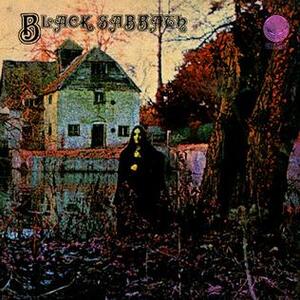
How it all came together... Black Sabbath's self-titled debut-album (1970)

Thanks for 2020 being what it is I didn't quite realise that this year marks the 50th birthday of our favourite music genre. Which is quite ironic really since pretty much from the start apocalyptic imagery is one of the defining themes in metal lyrics and artwork.

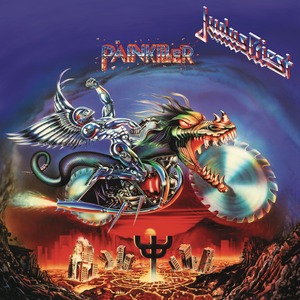
Probably one of the greatest pieces of escapism in music history ever: Judas Priest - Painkiller (1990)


I talked on this blog before about Black Sabbath's first two albums and what genre-defining significance their music had. And while there have been quite heavy sounding bands around before 1970, like Led Zeppelin, Deep Purple, Blue Cheer or Steppenwolf, none of them blended such heaviness in tone and rhythm equally dark and (for the time) edgy lyrical themes so consequential and compellingly.

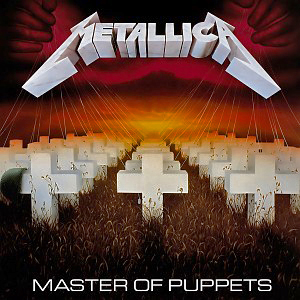
Of course I had to add Metallica. Luckily the motive really fits. Master of Puppets (1986)


The Guardian
published a compelling essay about their album Paranoid and I feel I don't have much to add to it, without sounding like I just repeat what they had to say. Therefore, instead of a retrospective, lets have a look at the present - and maybe a little into the future of metal in general too. Over the last 50 years the genre did branch out into countless genres and subgenres, some of them quite narrowly defined and surprisingly traditional. Overall a lot of the metal today feels - pretty much since the 2000s - rather stagnant and often quite bland. Too many bands that try to hit a bigger audience sound very safe and streamlined. The way the music industry today works may play a role here, but as a metal fan who likes the genre for its boldness, stark contrasts and strong emotions it can express, this just feels so wasteful when there is just another... product.

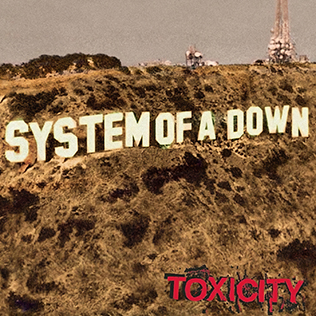
Definitely not just another product. System of a Down's Toxicity (2001)


On the other hand though, the abundance of cheap, good quality equipment and software offers possibilities like never before in the history of music. Any bedroom artist on a tight budget can now access better tools and equipment than professional studios had just a few decades ago. Just go and visit bandcamp. It might not be the most popular choice for listening to music, but what does popularity say anyway? There are tons of exciting bands out there that still radiate that uncompromising, dark and raw feeling that made me simply love metal. Bands that try something new, mix genres and just go for it, without the pressure of hitting a certain target audience or whatever. Bands that just want to make their music.

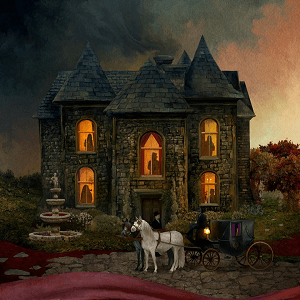
One of the progressive metal bands that actually is progressive: Opeth - In Cauda Venenum (2019)


Metal might not be as big in the mainstream as it has been in the 80s for example, but that doesn't has to be a bad thing. Not every successful album of that era was necessarily a good one. Streamlined, target audience-focused music isn't a recent invention. To me, metal being more of a niche-genre today is actually a good thing. Its still big enough to draw large crowds to festivals (well, maybe not in 2020^^) and sites like the aforementioned bandcamp, soundcloud or Youtube (yeah, Spotify is missing in this list. I don't use Spotify.) together with small independent record labels offer good platforms for new and exciting bands to be heard. I also wonder how much the current social-distancing-situation will inspire people to pick up an instrument. Like with other music equipment, they have never been that good for that little money.

Folky, experimental doom metal. Chelsea Wolfe - Hiss Spun (2017)


So yeah, its not all doom and gloom for metal (pun intended!). Far from it, actually. There are still plenty of diamonds to discover in the dirt. You might have to dig a little to find them, but its worth it.

Sonntag, 1. September 2019

Tool - Fear Inoculum (2019)


Yay! Finally a review of a current album! Something I wasn't sure if it would ever happen, and featuring an album by Tool. Something I wasn't sure if that would ever happen either - but here we are!

I always had a rather distant relationship to Tool. Most of their songs are a bit too 'cerebral' for my taste, with their machine-like precision, polished sounds and complex rhythms. I usually prefer dirt and spontaneity instead of too much perfection.

Well good news, if you are like me then: Fear Inoculum feels definitely more dirty than its predecessors, which I find helps a lot getting access to their music. At times they did remind me actually quite a bit of Baroness or Mastodon. This said. Tool of course stays Tool, and sounds like Tool. The band also hasn't dropped any of their complexity or darkness. The production just feels a bit less cold and more dynamic this time around.

The songs are, with the exception of a handful 'breather'-tracks, all above ten minutes. Quite naturally this means the album doesn't unfolds easily. To the contrary: it is full of buildups, mood- and tempo changes and a lot of dynamic - definitely an album that wants to be discovered. I had it running almost constantly over the weekend and I can't honestly say that it hasn't revealed everything yet. It probably takes a longer time-span of repeated careful listening to get behind it - and that's great!

For somebody like me, who isn't their greatest fan, I am quite surprised that Fear Inoculum has actually quite a lot to offer. It isn't the typical stuff I'm listening to, but I find the album very appealing and quite - hypnotic. It shows great skill without being lost in virtuosity while at the same time has this atmosphere of an H.R. Giger painting: A surreal biomechanical landscape you cannot help but explore.


Freitag, 31. Mai 2019

Rainbow - Long Live Rock and Roll (1978)


Rainbow's third studio album and the last one with Ronnie James Dio. In retrospect, it's the end of an era: Blackmore, who usually changed almost the whole band lineup between albums anyway, would continue with almost completely new personnel into a much more radio-friendly direction, before eventually disbanding the band in favour of a (quite successful, yet ultimately doomed) reunion of Deep Purple. He would never again release as bold, aggressive and progressive music as he did in the second half of the 70s. What a pity!

Where Rainbow initially not that much liked, and didn't really drew large crowds to their concerts, in retrospect they are one of the defining bands of the emerging heavy-metal genre. Speed, precision, epic lyrics and operatic vocals underlining the classically inspired melodies - Rainbow got it all.

However, compared to their 1976 masterpiece Rising, Long Live Rock and Roll is often seen as the lesser record. I disagree. Rising might been more complex and longer, or more progressive, as one might argue^^ but its successor is just that bit more accessible and compact, has more memorable riffs and - thanks to its more diverse songwriting - feels more engaging. Rising might been a relentless full throttle-trip from start to finish, but Long Live... gives you that little breather from time to time that makes its punches hit you even harder when they come.

And gods, punches it gives. From its cheerfully kickass opening track to the mystical and oriental Gates of Babylon, to the speedmetal powertrip Kill the King, the album has some of the best songs and riffs the band (or Blackmore himself actually) has ever written. Just blisteringly played (and I'm sure some actual blisters were involved), with a vocal performance by Dio, that once again can only be compared to singers like Robert Plant, Rob Halford and Ro... Ian Gillan on top of their game.

It's a shame that this should be the last Rainbow album with Dio's involvement and the band's last straightforward hard-rock album, until 1995's Stranger in Us All. The albums after him were not bad, but too often too streamlined for chart-appeal and too restrained even in their wilder-moments. Luckily for us, Dio stayed true to his style, went straight to Black Sabbath, recorded two stunning albums there, before starting his own project in 1982.


Sonntag, 5. Mai 2019

Rainbow - Rising (1976)


Compared to its predecessor Ritchie Blackmore's Rainbow, Rising cranks it all up to eleven: the sword and sorcery, the heaviness, the complexity and length of the songs, the instrumental performances - it is basically the quintessential record of the Dio-era. Did the first album sound like the band was dipping their toe into a new world of hard guitar-centered music, in Rising they jumped fully into it.

Probably the best example is the epic Stargazer. Everything is larger than life in this song. A miniature-opera about the rise and (quite literal) fall of a wizard who enslaved the people to build him a tower to the stars. The way guitar and vocals are dramatizing the story here works so well and expressive and organic, with both being at the peak of their abilities, that its a pure, uplifting joy listening to.

Might the rest of the album not quite have the same epic dimension, with predominantly fast-paced songs, it is nevertheless spectacular. A good part of this is due to Cozy Powell's dense and varied drumming, which ties the songs together and works as a perfect counterpoint to the stunning performances of the albums main actors, Blackmore and Dio.

I think in hindsight you can see how influential Rising was to 80's metal: The breakneck guitar shredding, the fantasy-centered cover artwork and lyrics, delivered by an almost operatic vocalist and the occasional keyboard flavouring - all these bits became commonplaces in the decade after.
Its just a shame that the band initially wasn't too successful. About five years later, when the world was finally ready for this type of music and bands like Iron Maiden and Manowar filled the venues playing quite similar material, Blackmore had pushed Rainbow into radio-friendly territories instead. Luckily for us, Dio kept on waving the heavy-metal banner high. First with Black Sabbath and later as solo-artist with his own band.
All in all, Rising is definitely a milestone in the evolution of metal and an underrated masterpiece. And even the cover is less eye-watering than the first one!

Mittwoch, 24. April 2019

Ritchie Blackmore's Rainbow (1975)


A lot has been written about Ritchie Blackmore's departure from Deep Purple and the formation of his own project, Rainbow. That he de facto took over the band Elf, which was supporting Deep Purple while touring around that time and had a certain Ronnie James Dio on vocals... So I spare ourselves a more extensive recap. Instead, onwards to the meat and potatoes!

The album begins with Man on the Silver Mountain, which, surely not coincidentally, has some similarities to that one Deep Purple song everyone knows. Just like Smoke on the Water the main riff is played in fourths (quite a trademark of Blackmore and found in a lot of his songs throughout his career) and the song grooves confidently along in the mid-tempo range. Quite radio-friendly actually. But as similar the songs are, Ronnie James Dio's vocal performance adds a more dramatic and operatic vibe to it, than Ian Gillan does. Where Smoke on the Water muses on the very worldly events during the recording of Deep Purple's album Machine Head and even includes their exact location in its lyrics ("We all came out to Montreux..."), Man on the Silver Mountain is more cryptic and evokes mystic imagery and is located very much in fantasy-land. Or Middle Earth.

While there are some more typical rock'n'roll songs as well, namely Black Sheep of the Family and If you don't like Rock and Roll, they appear really as the weaker moments of the album. I often get the impression Blackmore isn't that comfortable playing blues or blues-based material and these songs are showcasing this pretty well. While they are technically flawlessly played, they sound maybe a bit too clinical for their own good. Maybe the band tried to emulate Led Zeppelin here. Not a bad attempt, but they just lack their swagger. And Zeppelin was all swagger really.
(I think Blackmore actually wanted Rainbow to be a mix between Led Zeppelin and Deep Purple, so there you go: Deep Zeppelin or Led Purple, take your pick.)

Luckily for the remainder of the album the band is very much speaking its own language and tries not to sound like anyone else. And to the benefit of the songs: the ballads don't try to be folky or something like that, as Zeppelin did before. Instead they take their inspiration from classical music and medieval tunes. After all, Blackmore is more a Bach- and Beethoven guy. Its quite funny to listen to songs like Temple of the King or Catch the Rainbow, realizing that twenty years before forming Blackmore's Night, he pretty much made already the same music!

Where the album really shines however, is in the hard and heavy end of the spectrum. Namely songs like Sixteenth Century Greensleeves and Snake Charmer. Here the epic fantasy can run freely: liberated from the limitations of 12-bar blues and straight into proto power-metal territory with Dio's heroic voice, heavy drumming, fast arpeggios and punchy riffs. Great songs which heritage can still be heard in today's metal.

As it is typical for a rock band of the 70's, especially with such strong lead personalities as Blackmore and Dio are, the rhythm-section - Craig Gruber on bass and Gary Driscoll on drums - stays consistently in the background. They certainly do a good job and give the songs a very naturally flowing feel while at the same time very competently delivering heaviness, but you can sense they are not the most important members of this band. Same applies to Mickey Lee Soule on the keys. At least he gets a bit of spotlight with his rock'n'roll piano in Black Sheep of the Family. But for vastly the largest part this album is very much a guitar-plus-singer album.

All in all, Ritchie Blackmore's Rainbow is a bit of a mixed bag. It certainly has great moments and historic significance. The two main protagonists Blackmore and Dio can really shine and show off their talents. On the other hand, it feels like the band hasn't fully explored their possibilities yet. Something that would change with their follow-up album Rising.
And yes, the cover is ghastly. As influential their music was, their choice of artwork sadly was so too.

Sonntag, 7. April 2019

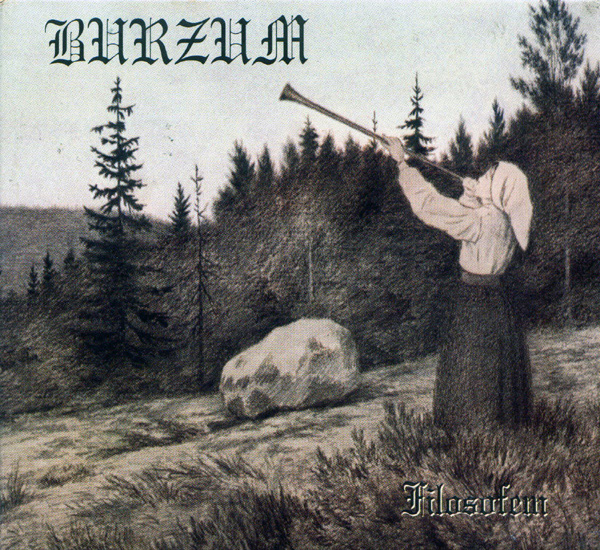
Burzum - Filosoferm (1996)


Ok, this is a tricky one for me - probably for obvious reasons if you know the history of the artist behind it. I will explore this a bit further in a minute. First, I want to take a look at what compelled me to eventually write this review: the music.

When I discovered this album (and Black Metal in general) in the early 2000s, stuff like Rammstein, Marilyn Manson and some other goth metal bands were probably the hardest and darkest music I was aware of (it was a more innocent age, you know) and hearing stuff like this for the first time was in a way repelling, I admit. Yet... fascinating.

Especially so Filosoferm. The harshness of the sound, the unconventional, hypnotically repetitiveness of the tracks - for me there wasn't anything like that really. Metal is usually a relatively conventional genre and hearing it stripped down to its bare bones, then slowed down and combined with ambient-elements you would usually expect in much kinder works, was quite an eye-opening experience to me. The album simply worked. Even if it combined on first glance quite contradictory extremes.

And these extremes could hardly be starker. It starts with the song "Dunkelheit" (=Darkness). With guitars drenched in snow-storm like white noise, distorted vocals about darkness and death and monotonous drums working steadily through the songs, while on the other end of the spectrum there is a track like the 25 minute long "Circumambulation of the Transcendental Columns of Singularity" (I spare you the german version of its name), which consists basically of an almost shy, minimalistic electronic beat and some ambient sounds; giving it a dreamlike quality. Really impressive how so much atmosphere is created by so little and how well these two extremes blend.

Groundbreaking albums often start to sound dated with time. The novelty they introduce gets picked up by others, developed and refined further, making the initial innovation appear... unfinished or even obsolete. But not in this case: Filosoferm hasn't lost anything of its impact. It sounds truly timeless; maybe because it defied following any trend or convention, but rather a concept.

As much I like this album though, as much I am repelled by its creator and his sick, neo-nazi ideology and this is the very core of the contradicting feelings I had towards this album for a long time (years in fact), and the very reason why I barely listened to it until recently.

Eventually, I made my peace with it and began to separate it mentally from its artist. For a good part because it is about emotion and conveying moods and not about propagating ideology.
Also, to me, the artists aren't as important as the art they create. Humans can be quite mundane and petty, whether they get idolised or not. Yet, with all their human flaws, they at the same time can create incredibly impactful pieces of art. And maybe they do it because they are tortured souls in one way or another, not in spite of. Just think of people like Franciso Goya, Richard Wagner or Francis Bacon. The people are long gone, but their creations will last.

In the end I wonder how much of the events back then in 1990s Norway, with all the church-burning and murders, were just some teenagers trying to one-up each other, until things got violently out of control by someone like Vickerness, who probably had (and may still have) mental issues and lost himself in the visions of destruction and death he helped create.

I also sense some genuine ambivalence within the whole Black Metal aesthetics. No doubt the music is a genuine expression of anger, fear and frustration. That's exactly what makes it so strong. The stark black-and-white aesthetics of the album covers (sadly not on Filosoferm) also has undeniable power. At the same time, corpsepaint, spikes, medieval weapons and all these accessories, are in my eyes quite juvenile ways of dressing up to appear "evil", which can devalue the earnest of what they actually want to say and therefore not the best call aesthetically.
The same applies for the choice of names from Tolkien's Ork-language (like Burzum). Sure, in the 90's Tolkien was less present in the mainstream as it is since the Peter-Jackson-films, yet again - the whole idea just doesn't fits quite right. It's actually quite kitschy. And probably was already back in the 90's.

Recent artists though seem to have found a more suitable stylistic approach. A great example is Myrkur, who uses pagan- and nature-inspired imagery so coherently and with such impact, without overdoing it and making it a "show". Musically though, I don't think artists like this would do the music they are doing without albums like Filosoferm. Like other milestones in music, it opened the door into a strange, new world for others to explore.

Samstag, 1. September 2018

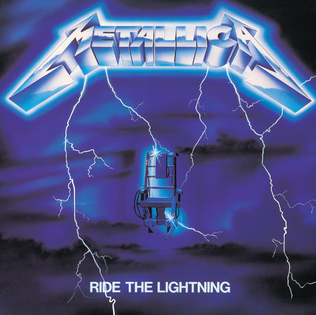
Metallica - Ride the Lightning (1984)


I have a bit of a love/hate relationship to Metallica. On the one hand, I really like their albums from the 80s, on the other hand, I find they didn't really do anything relevant, or even noteworthy in the last 20-something years. But that's not our topic for today!
Ride the Lightning is one of their records I really love. After a promising and already technically quite impressive, if a bit too simple debut-album, Kill 'Em All from 1983, Ride the Lighting is an enormous leap forward.

Before it came to that though, Metallica went through quite turbulent times. Namely rising tensions with their original vocalist/guitarist Dave Mustaine, over his violent behaviour and his drug and alcohol consume. This escalated in him being sacked from the band just before recording Kill 'Em All. As a consequence, Mustaine, while not actually playing on the album, got song writing credits on a number of tracks of their first and second album. including the eponymous Ride the Lightning and Call of Ktulu.
Mustaine went on and formed Megadeth, and Metallica found its identity in with Kirk Hammett as new lead guitarist, James Hetfield growing into his roles as vocalist and rhythm guitarist, Cliff Burton on bass and Lars Ulrich on drums. Together both bands became two of the most influential metal bands and biggest rivals of the 80s.

Were changes in tempo and dynamic not a completely new thing in rock/metal, when Ride the Lightning came out, (Led Zeppelin and Black Sabbath were doing that sort of thing more than a decade before), the way how consequentially Metallica was contrasting clean, almost folky passages with their speed and heavy, brutal riffing to build up a narrative within a song, proved to become highly influential for the genre. Technical excellence is one thing - and there is plenty of that on Ride the Lightning as well - but if you can tell a story with your music, and have some emotional impact, or at least give them time to breathe before the next full-on assault, you can catch your audiences attention on a completely new level.
And the album is bursting with great ideas and songs. May it be thrashers like Fight Fire with Fire or Creeping Death, epic narratives like For Whom The Bell Tolls or Fade to Black, or the brilliant instrumental The Call of Ktulu or the breakneck-speed ride Trapped Under Ice - they all show a masterful level of catchy songwriting, variety and spot on instrumental performances. It is no surprise that this album is still some of their most known and liked ones and part of what defined metal in the 80s.


Mittwoch, 29. August 2018

Cathedral - The Carnival Bizarre (1995)


Doom'n'Roll! That was the spontaneous reaction of one of the guests, when I started playing Hopkins (The Witchfinder General) at a party once. I think, there is barely a better name for what the band was doing on this album.

If is doom-metal usually identified with slow, dragging rhythms and bleak expressions of desperation, Carnival Bizarre is - to me, and obviously to my guest as well - a lively and irresistibly good-mooded record, that just makes you want to move. Yeah, its party music, whether Cathedral intended that or not and lets be honest: song titles like Fangalacticus Supergoria really must been a hell lot of fun to make up!

The band itself was founded in 1989, by Lee Dorrian, after he left Napalm Death, where he wasn't happy with the direction the band took, namely death metal. Something I definitely can emphasize with. And thank the heavens (or hell) for his decision. It brought us a band that influenced and enriched the genre like not many before.

Stilistically, Carnival Bizarre features, as you would expect in doom, heavy riffs that rival the Himalayas (or HP Lovecraft's Mountains of Madness, your choice), combined with driving and varied rock-grooves and Dorrian's characteristic shouty, but clean voice. He might not have the range of a Ronnie James Dio, but he certainly knows how to transport excitement.

It is maybe a bit of an untypical doom-record, but certainly it is an excellent one regardless. Oh, and its hard to top the imagery of their video to Hopkins. What a hedonistic delight!


Samstag, 25. August 2018

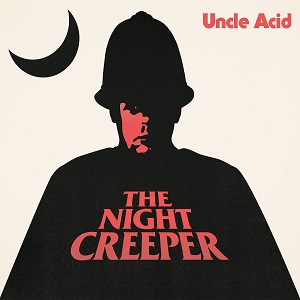
Uncle Acid & the Deadbeats - The Night Creeper (2015)


If you ever wondered, how it would have sounded, if Black Sabbath and the Beatles got merged together in some weird teleportation or cloning accident, Uncle Acid & the Deadbeats' The Night Creeper might give you the answer: Imagine Lucy in the Sky with Diamonds played with heavy riffing guitars, eery, distorted vocals and repetitive, hypnotic grooves. A gloomy psychedelic nightmare you may find, you can't get enough from.

Thematically, the album revolves around the eponymous Night Creeper, a Jack-the-Ripper-style serial killer. And it does it brilliantly. The way it transports its distinctive 60s-psychedelica-atmosphere, like an expressionist horror film inside your head. The haunting vocals, the Sabbath-like chord progressions and the very retro production - everything just plays together just brilliantly, creating a truly unique experience.

This said, Uncle Acid & the Deadbeats is certainly not everyone's taste and if you are into more conventional, or simply more modern metal, you might not enjoy them too much - for all the reasons mentioned above!

To me, Uncle Acid are one of the most significant discoveries in the recent years. Retro-doom at its finest, with a lot of emotional impact and their own, unique character. Not an easy thing to achieve, but they delivered brilliantly.


Mittwoch, 22. August 2018

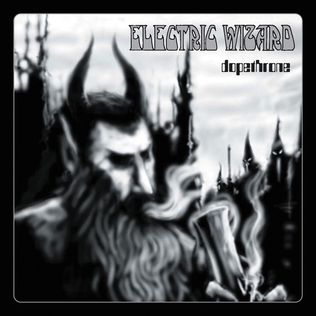
Electric Wizard - Dopethrone (2000)


Electric Wizard has seen quite a soar in popularity in recent time. Something I find pleasantly surprising, since their music isn't exactly the most mass-market compatible. Maybe though, that's exactly the reason why: there is a certain underground authenticity in music that consciously tries to be as far away as possible from the calculated, watered-down mainstream style that so many bands pursue. This doesn't means they aren't accessible, though. With the right ears, attuned to Black Sabbath's Master of Reality or some Cathedral, with the hypnotic repetition of Hawkwind's far-out space-trips, Electric Wizard quickly speaks to you.

To me, their greatest album remains Dopethrone from the year 2000. A raw, droning masterpiece, recorded, according to bandleader Jus Oborn, literally in a drug and alcohol-induced stupor - and it shows in the best sense possible. At its time, Dopethrone did expand the boundaries of metal into a weird, tribal ritual of excess.

While being genuinely dark and monstrous in its sound, with massive guitar-riffs and shouting, madman-vocals drenched with distortion, the album also has an undeniable, and actually quite irresistible, groove and playfulness to it. The album really rocks, which is quite an achievement in this context. It may be a ride through hell and purgatory, but it does it with style and grace, showcasing some musical talent and inspiration that really set Electric Wizard  apart from most bands of the genre.

In a way it's a bit tragic that Electric Wizard had their peak so early on. It's not like the successor-albums were bad - to the contrary - but in Dopethrone the band achieved a perfect balance of chaotic, raw emotion and the discipline that allows them to actually take all their energy and turn it into a truly mastrful album.


Samstag, 18. August 2018

Dio - Holy Diver (1983)


His stints at Rainbow and Black Sabbath catapulted the unknown singer Ronnie James Dio (born Ronald James Padavona), of the unknown rockband Elf up at the Mount Olympus of hardrock and heavy metal. After leaving Sabbath in 1982, he formed his own group the following year. Conveniently named Dio, after himself. And probably to ensure this time there are no doubts about who is its leader.

The new band basically picked up where he stopped. With straightforward fantasy-inspired heavy metal as it would become archetypical for the 1980s. Unlike the guitar-dominated sound of Sabbath or Rainbow though, with more emphasis on the vocals. And rightly so: Ronnie James Dio's voice is as distinctive as it is powerful. Together with Judas Priest's Rob Halford, he probably was the metal vocalist of the 80s. A singer you would recognize amongst thousands. So dynamic and yes, almost operatic in its range and power. Always giving that little extra emphasis, that is needed for proper heavy metal theatrics. He could sing your shopping list and make it sound like an tolkienesque-epic.

As brilliant as his voice was though, it would have been a waste if the other musicians weren't up to their task. And hell, they are. Guitarist Vivian Campbell's playing is in every sense a proper substitute for Ritchie Blackmore or Toni Iommi, without the danger of mimicry, and the rhythm-section, including Jimmy Bain on bass and drummer Vinnie Appice, who he snatched from Black Sabbath (where they recorded Mob Rules together), delivers a seemingly effortlessly brilliant performance. The whole album just marches ahead with straightforward classic heavy metal. Every fill, every riff and every solo spot on. Holy Diver feels like the band is playing together for a long time already. No surprise that quite a number of songs, like Holy Diver, Don't Talk to Strangers, Straight Through Your Heart and Rainbow in the Dark, became live-staples and are now regarded as heavy metal classics.

Musically, Holy Diver is of course not the most diverse of all records. It pretty much does what its cover-art promises. Well. not literally. Though, that would be quite something... Anyway. if you expect introvert subtlety, then you might have misunderstood the whole concept of heavy metal in the first place!

All in all, Holy Diver is epic 80's heavy metal at its finest and truly a must-know-album, that helped defining the genre. The band in this line-up would record two more albums, The Last in Line (1984) and Sacred Heart (1985), before descending into power struggles and instability. To me, these three albums mark the highlight of the band. Later albums still have their moments, but won't offer such an abundance of consistently strong material.


Mittwoch, 15. August 2018

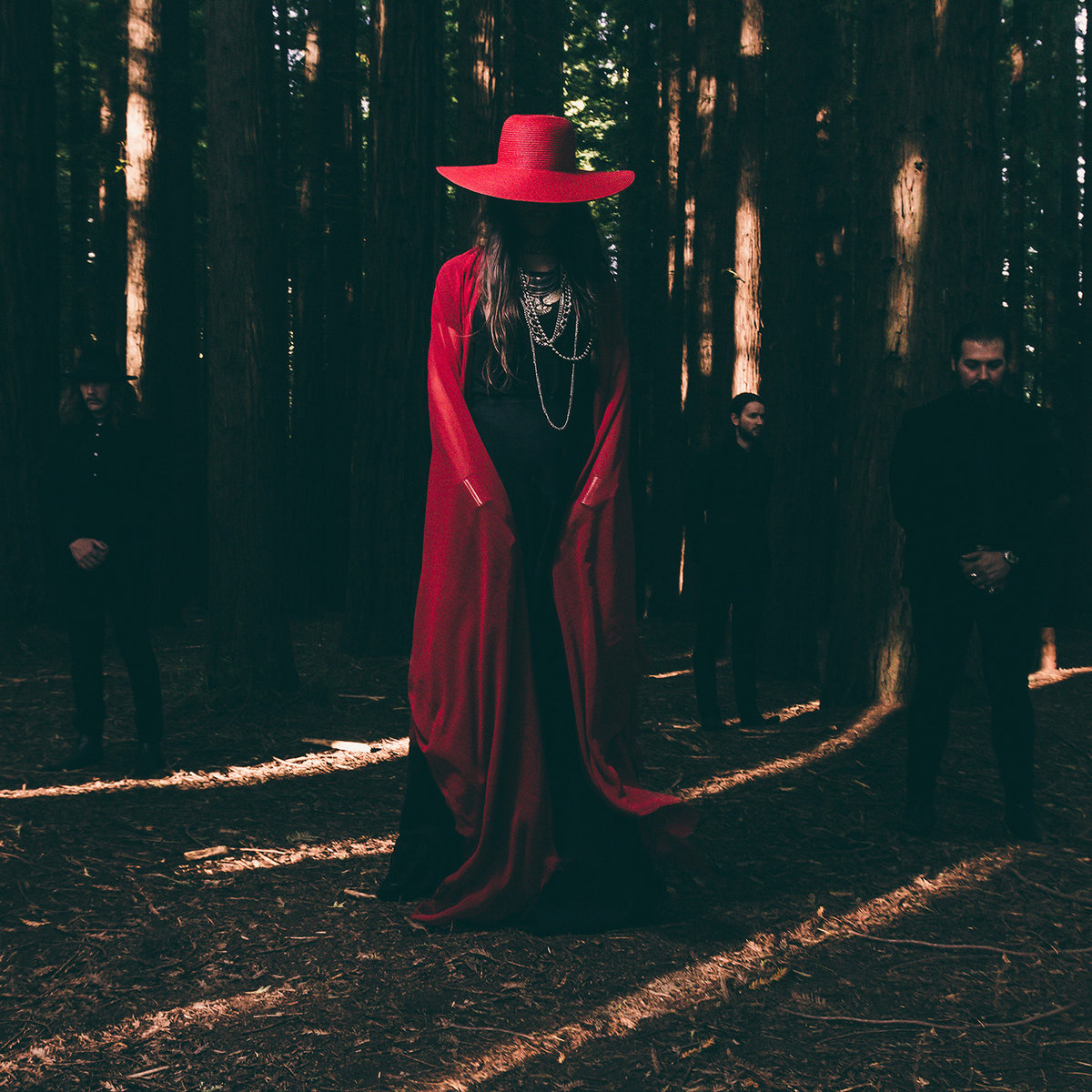
Devil Electric (2017)


Devil Electric are a recent discovery of mine. As the name and the cover picture of their debut album suggest, they are another example of the ever-growing Black-Sabbath-inspired, female-fronted proto-doom-occult rock genre. Phew, what a word! And while they certainly don't reinvent the wheel (or their genre), the quartet from Australia knows how to make some excellent, gloomy music.

On the instrumental side, Devil Electric are indeed closely resembling early Black Sabbath. With a lot of heavy,  fuzzy guitar, riffing on doomy intervals and accompanied by a rhythm section that stomps along like an iron behemoth with an impeccable sense of groove in its hulking limbs. So far, so good! Nothing revolutionary, but a very compelling performance. The really outstanding part however, that adds so much character to the band, is its vocalist.

With her bright, light-footed voice she often appears to dance above all the growling, heaviness the band unleashes. The result is - by all the contrast she adds to the sound - a nevertheless quite symbiotic feel, with interesting changes in rhythm and dynamics. It is this dance of contrasts that keeps Devil Electric, contrary to all the familiarity of their songs, varied and engaging - and a little bit unpredictable too. Very effective.

All in all, a strong debut with a lot of 60s- and 70s vibe. It could be the ideal soundtrack to a Hammer film. With misty graveyards, scantly clad witches and generous amounts of blood. Given the number of similar acts I sometimes wish they would stray away from the established, clichéd Black Sabbath-sound a bit more and experiment a bit more with their own style. The potential is certainly there.


Samstag, 11. August 2018

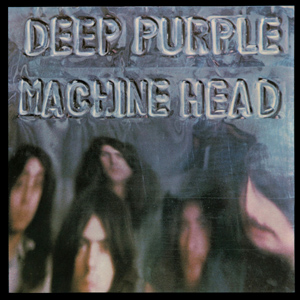
Deep Purple - Machine Head (1972)


For many Machine Head is the best album of the Mk2 era. An opinion I never really shared. Sure it has Highway Star, Space Trucking, Lazy and - of course - their biggest hit, Smoke on the Water. A strong line-up of songs. But is it really? Let's have a look.

The opener, Highway Star, features a perfectly executed build-up and a machine-precise, driving groove in perfect interplay with vocals, riffing and spot-on neoclassical* soloing. Its a showcase piece of what this band was able to. I think you can't handle the subject matter more elegantly than with with Highway Star. An outstanding piece of music. Pure genius.

Other songs, like Maybe I'm a Leo, Pictures of Home and Never Before tell a different story though. Not that they are bad. They are all very well executed, but they don't excite or offer much memorable. Highway Star is a song that evolved and got perfected on stage, resulting in such a well-composed and exciting piece of music. The trio above, on the contrary, simply feels generic.
Ironically, Never Before was actually the song the band gave the most chances of being a hit single. It consequently has been released as one (with a much more captivating When a Blind Man Cries as B-side) and peaked at - #35 of the UK charts. So much for good judgement. I wonder if that's a sign of the band getting tired already of their Sturm und Drang-sound of In Rock and Fireball.

Smoke on the Water though, I guess I don't have to say too much about that one. Maybe just so much: its a really good song, no doubt. With a very catchy riff obviously. Overplayed? Definitely, Overrated? Maybe a little! Being consistent with their former decision with Never Before, the song was not released as a single. At least not initially. Only after radio stations picked it up, it was eventually released. In May 1973.

The two remaining songs on the original release, Lazy and Space Trucking are a cut above the trio Maybe, Leo and Never, but again not as inspired and captivating as you would expect from such a highly rated album. Lazy is, after a very tasteful keyboard-intro, basically a refined jam-session based a catchy guitar riff. Its really nice to hear the band grooving along. No doubt about that. They are  so organic and precise - but that's just not enough to make a great song out of it.
And Space Trucking is in its studio-version maybe a bit too restrained to really take off, which is a pity, since everything seems to be in place: a really catchy riff (played with an Hammond organ via Marshall guitar-amps, actually), silly, catchy vocals and once again their superb rhythm-section. Blackmore has some good moments as well.  Now, if that song would been a couple minutes longer, with a bit more experimentation...

So much for the original release on LP. Later versions of the album include When a Blind Man Cries. A song so touching and fragile that it makes me really wonder why it didn't make it on the album initially. Especially, since Machine Head stays well under the 40-minute mark without it. Maybe it didn't fit to their image to have a ballad, who knows. Then again, Fireball had Anyone's Daughter, and having one ballad as a little breather doesn't sounds like such a bad idea to me, if there is so much space for off-the-shelf rock songs on this record.

In the end, Machine Head lives from a couple outstanding songs, with some generous padding by mediocrity. In terms of creativity and excitement it can't reach Fireball, or In Rock, which were daring and have their sparks flying so much more than this record. On the other hand, Machine Head is more focussed and compact and maybe a bit more radio-friendly this way. The sound has also improved quite notably compared to its predecessors, being nicely crisp and transparent.
Overall its still a good album. Maybe not as inspired as it could be, but listening to a band that plays so well together like Deep Purple makes it still a quite enjoyable thing.


Mittwoch, 8. August 2018

Literary Intermezzo: Clive Barker - The Scarlet Gospels (2015)


When the film Hellraiser came out in 1987 (based on the book The Hellbound Heart, released in the previous year), it was a game-changer of the horror genre comparable in its vision to The Exorcist or Alien.  Like these films before, it offered us a new take on familiar elements of the genre: Barkers unique take of hell and its demons, the grotesque disfigurements, the mixture of sex and gory violence - Hellraiser was a film that hinted at a richer, deeper world beyond what you saw on screen. Perfectly embodied by the iconic Pinhead. Unfortunately, it was followed by a number of sequels that never could live up to the original and rapidly deteriorated in quality.

In the late 90s, when the damage to what has become the Hellraiser-franchise was already mostly done, writer and director Clive Barker, who wasn't involved in any of the sequels, eventually decided to pick up what he started more than ten years ago, give it a decent conclusion as he envisions it. The result is The Scarlet Gospels, has 368 pages, which is maybe a bit surprising if you know what his books from the late 80s and 90s, but more on that later, and has been released in 2015.

The Scarlet Gospels start with a series of gruesome murders amongst the world's leading magicians, which turns out to be part of Pinhead's plan, who is actually named Hell Priest in the book, to amass enough magical power to take over hell itself. Another character from Barker's books, the supernatural detective Harry D'Amour, with a couple of friends, gets on the Hell Priest's tail and the story unfolds...

According to what I have gathered from interviews, the book was originally going to be significantly longer and has been cut down on demand of the publisher. Something that - for an author of Barker's calibre, who certainly isn't a beginner - appears quite unusual and I wonder if this may be the reason, together with its unusually long digestion period for some of the fundamental flaws of this book.

It is certainly ambitious. In a way Imajica and The Great And Secret Show are - the two favourite books by Barker. Both books get time to breathe and let their rich and imaginative worlds and its characters unfold. The Scarlet Gospels though race through their story like a hollywood screenplay. Unsophisticated and quickly paced, it doesn't really leaves much time to introduce its characters and let them interact with each other beyond some superficial bantering and wisecracking.
This makes most of the characters, save for the very central ones, not much more than one-dimensional dialogue-givers and the whole book uncanningly distant and unemotional. It could have been a enchanting, mysterious and multi-layered experience, like his best works are. Tragically, it throws away all the promising elements it has.

After finishing The Scarlet Gospels, I started reading Sacrament (1996) again. A book I have fond memories of. And after 30, 35 pages it is already deep in the characterization of its protagonist and his friends, while at the same time, baits us elegantly with the central mystery of the story.
The difference couldn't be greater: subtlety and skilful pacing vs. quick action. well-rounded, realistic protagonists (even the side-characters) vs. placeholders and snarky one-liners. The Scarlet Gospels' weak writing makes it appear like its been trimmed-down and dumbed-down beyond recognition in contrast. And I really, really hope it's the publisher to blame for this.

I would gladly say I enjoyed The Scarlet Gospels more than I did. It is better than all the uninventive sequels, but I argue this isn't such great an achievement. I would love to praise the sheer scope and wealth of Barker's storytelling and the intensity of its characters. And its not like there aren't glimpses of its potential. But it falls short to really pick them up and fly with them. Instead, it plays safe and leaves us a quick and easy to digest, but fundamentally insubstantial product. What a pity.

Samstag, 4. August 2018

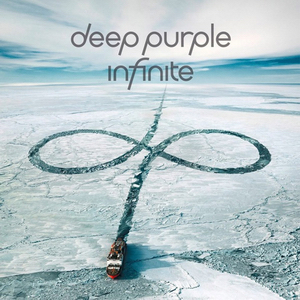
Deep Purple - Infinite (2017)


Not many bands can still surprise, or even excite you after they have been around for almost 50 years. When listening to Infinite, Deep Purple's most recent album, I knew for sure: they can.

The album kicks off with Time For Bedlam. Such a dark and irresistibly pressing song, that's on a level with some of their best and most intense material, like Perfect Strangers, Child in Time, or Rapture of the Deep. A vision of brutal suppression and resistance, perfectly crafted, like a Hieronnymus Bosch painting of hell. Ian Gillan's clerical chanting in the beginning, declaring that he is "descending the cold steps of the institution for the political insane - never to be seen again", building up tension, then the rest of the band kicks in and sending the song off with claustrophobic intensity - a textbook example of how to throw its listener right into the action.

May the rest of Infinite be not quite as gloomy and dramatic, it stays quite heavy, with the relaxed and confident playfulness of a band that feels free and fully in its equilibrium. The result are songs which are fresh, witty and flow so naturally and groovy that its simply a pure joy to listen to.

From the light-hearted, and slightly self-deprecating hymn Johnny's Band about the rise and fall and eventual muddling on of a rockband (with a hilarious promo video), to the tender and melancholic The Surprising and stomper like Hip Boots or Get Me Outta Here - Infinite is overboarding with strong performances. There isn't really a song you could call a filler... except the last one: The Doors cover Roadhouse Blues, which is just unnecessary and misses the feel of the original, without adding anything new and relevant to it.

Even with that little lapse, Infinite is one of the band's strongest albums. Like the last couple of releases, it shows that even a band that has been around for so long, still can be inventive and wild and write songs where you keep on discovering something new. Brilliant stuff!

Who knows for how much longer Deep Purple will still be around, but at least, If Infinite is really going to be their last record, then they end their long and spectacular career on a high note.


Mittwoch, 1. August 2018

Rammstein - Live aus Berlin (1999)


Some bands I like live much more than on their studio records. Rammstein is one of those bands. I guess its the dirtier, rawer sound and the stripped down electronic-elements. Its just more rock'n'roll going on and their Live aus Berlin album from 1999 captures that side of the band perfectly.

To me, this also marks a turning point in the band's career. The first two albums, Herzeleid and Sehnsucht, were much more edgier than their later releases, dealing with topics like incest, necrophilia, murder - and surely a number of other perversities I have missed out. Not to be taken terribly serious of course. Back in the day, Rammstein were fun! In their own, wicked way, but nevertheless fun.

There has been quite a substantial hiatus between Sehnsucht (1997) and the follow-up album Mutter (2001). Live aus Berlin as the only release in that time and I had no idea the new millennium would bring back such a watered-down band. It has been one of the great disappointments in listening "career" to buy their single Sonne and just being completely underwhelmed by what I heard.
Luckily, we are not delving too much into that today. Live aus Berlin shows us the band at their rawest and most daring.

The songs are intense, tight and still fresh after all those years. And quite overwhelming in the sheer brutality of their sound. There wasn't much like Rammstein around in the mainstream music of the 90s. Maybe Marilyn Manson and Nine Inch Nails, but neither of them had quite this menacing aura, Rammstein had. Maybe they should have sung in German too...

Given Live aus Berlin's runtime of 1 hour and 15 minutes, there isn't a relevant song from their first two albums missing. Well, ok. Except Klavier, but that's nitpicking now. Live aus Berlin an excellent album. Spectacular, dramatic and overwhelming. A perfect document for the early, wild phase of the band's career.


Samstag, 28. Juli 2018

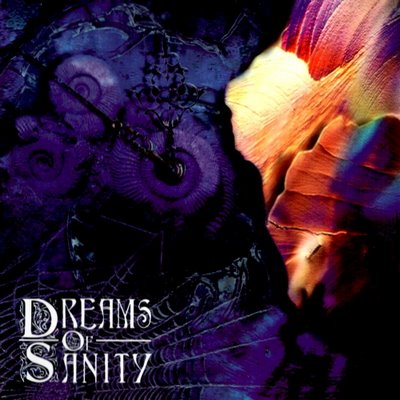
Dreams of Sanity - Komödia (1997)


This one might just be another case of "brilliant albums you may have never heard of". Released in 1997, so just over 20 years ago, Komödia was the first full length album of the Dreams of Sanity, after having recorded a couple of demos before, and you wouldn't know it from just listening to it.

Komödia is a beautiful and complex album, with a refinement that is just remarkable. Especially for a debut. And on top of it all it's subject matter is nothing less than one of the greatest works of world literature: Dante Alighieri's Divine Comedia from 1320. An epic poem describing the journey of a wanderer, guided by the Roman poet Virgil, through hell, purgatory and eventually heaven on the search for his lost love, Beatrice.

Clearly, you can't blame Dreams of Sanity for a lack of ambition and, of course, when you aim that high, the chances of failure are quite substantial too. The band however masters their set task brilliantly, with confidence and excellent ideas. A really classy performance, especially by the vocalists, who contribute a lot with their expressive, nuanced performances.

To me Komödia has as much in common with a classical symphony, or opera as it is a metal album. And quite extraordinary in how it brings both together. It is rich and complex, without being too academic, features nuanced and stunningly beautiful songs without drifting off into kitsch-regions, is technically impressive, but never forgets to play for the song, not over the song - its no coincidence really that I still find this album so appealing and interesting after all those years.

Dreams of Sanity would release two more albums, Masquerade and The Game, before they split in 2002 after several line-up changes. A pity they never got the recognition they deserved.


Mittwoch, 25. Juli 2018

The Gathering - Mandylion (1995)


When I showed the record a friend once, who had no idea about the band, he remarked that "this looks like classical music", I think this spontaneous, and not really qualified, assessment is actually quite suiting. This is miles away from mainstream rock and metal. In fact, it is not a trivial question where to put The Gathering really. A fact, which I find actually quite delightful. Is it gothic? symphonic? prog? All of the above? Does it matter?

Anyway, I discovered the band while everyone else was into stuff like Nightwish (once again I dutifully did exactly what everyone else wasn't doing). Goes without saying that I was appealed by the more edgy and experimental sound of The Gathering, despite being quite "symphonic" in their own way. They music is without a doubt quite heavy and dark, almost wagnerian at times, while it also shows some (for the genre) unusual instrumentation and airy colourfulness, creating an interesting and appealing mix.

I find it always fascinating to see the development some bands go through and The Gathering are a good example for a band that changed quite a lot over the years. They started in the late 80's as a doom and death metal band, yet as of Anneke van Giersbergen's arrival in the band for Mandylion, their sound has distinctively and lastingly changed and dramatically expanded its scope.
And certainly, her expressive voice fits ideally to their music. Not as sweet and angelic as so many other female symphonic metal singers, but with an edginess that happily deviates from the norm and works well with the band's overall experimental-attitude.

Still, certain elements still hint to their past. Especially the guitar work: heavy riffing with long held power chords and melodylines is certainly doom-influenced. Interestingly the result is actually quite Pink Floydian as well. Just think Dogs of War and Sorrow.

In later albums, starting with How to Measure A Planet, they began to abandon their metal roots more and more and moved towards a experimental, sometimes ambient-like direction. Something the band itself described as trip-rock - undeniably a quite suiting term.

Mandylion is a colourful, highly enjoyable album. Beautifully composed and executed. It shows a band able of writing songs that are complex and varied on the one hand, but at the same time catchy and beautiful.
The Gathering might not be everyone's taste, but in a genre like metal, with so many conventions and stylistic uniformity, an album like Mandylion is a more than welcome departure from the norm. It's actually quite needed.


Samstag, 21. Juli 2018

Jess and the Ancient Ones - The Horse and Other Weird Tales (2017)


Regular readers might have noticed that, besides metal and hard/heavy rock, I also have a soft spot for music from the 70s, psychedelic in particular. And it seems like Jess and the Ancient Ones did their best to push my buttons in that regard.

The album is quite a remarkable experience. Stylisticly somewhere between The Doors and retro-occult-rock like Blood Ceremony, The Horse and Other Weird Tales is colourful, organic and beautifully arranged, with some truly captivating songwriting.

 On top of it all vocalist Jess, who is transporting so much pure energy with her dynamic and engaging singing without sacrificing melody. Was her performance on their first record often quite shouty, on The Horse and Other Weird Tales she sounds so much more refined and in command and in the best sense of the word haunting. Dramatic changes in mood, tempo and rhythms - her performance is really outstanding.

If there is one thing to complain about, and I am happy to say there is only one thing actually, then that it just feels too short. The overall runtime is only 34 minutes and most of the songs are just between two and three and a half minutes long, leaving you craving for more. I certainly would not blame a lack of ideas here. To the contrary. The songs are so rich that most of them could easily be twice as long and still entertain me splendidly.
But maybe its better this way. Maybe they want their listeners to stay hungry for more than having a profound lack of ideas dragged out over 20 tracks and 70 minutes, as it happens too often.

All in all a brilliant piece of psychedelic rock with an outstanding singer. A bit too short, but then again - that doesn't takes anything away from all the goodness that's there!