Mittwoch, 16. September 2020

Happy Birthday you loud and rude piece of music! (Metal exists for half a century now)

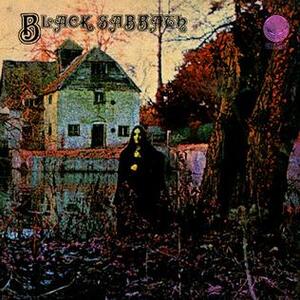
How it all came together... Black Sabbath's self-titled debut-album (1970)

Thanks for 2020 being what it is I didn't quite realise that this year marks the 50th birthday of our favourite music genre. Which is quite ironic really since pretty much from the start apocalyptic imagery is one of the defining themes in metal lyrics and artwork.
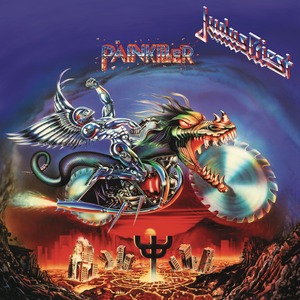
Probably one of the greatest pieces of escapism in music history ever: Judas Priest - Painkiller (1990)


I talked on this blog before about Black Sabbath's first two albums and what genre-defining significance their music had. And while there have been quite heavy sounding bands around before 1970, like Led Zeppelin, Deep Purple, Blue Cheer or Steppenwolf, none of them blended such heaviness in tone and rhythm equally dark and (for the time) edgy lyrical themes so consequential and compellingly.
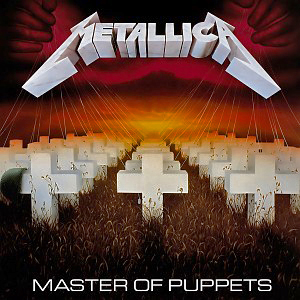
Of course I had to add Metallica. Luckily the motive really fits. Master of Puppets (1986)


The Guardian
published a compelling essay about their album Paranoid and I feel I don't have much to add to it, without sounding like I just repeat what they had to say. Therefore, instead of a retrospective, lets have a look at the present - and maybe a little into the future of metal in general too. Over the last 50 years the genre did branch out into countless genres and subgenres, some of them quite narrowly defined and surprisingly traditional. Overall a lot of the metal today feels - pretty much since the 2000s - rather stagnant and often quite bland. Too many bands that try to hit a bigger audience sound very safe and streamlined. The way the music industry today works may play a role here, but as a metal fan who likes the genre for its boldness, stark contrasts and strong emotions it can express, this just feels so wasteful when there is just another... product.
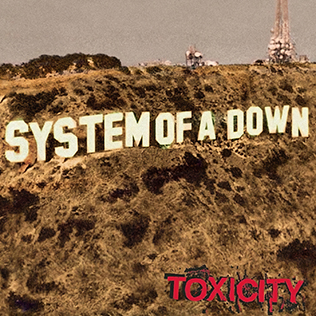
Definitely not just another product. System of a Down's Toxicity (2001)


On the other hand though, the abundance of cheap, good quality equipment and software offers possibilities like never before in the history of music. Any bedroom artist on a tight budget can now access better tools and equipment than professional studios had just a few decades ago. Just go and visit bandcamp. It might not be the most popular choice for listening to music, but what does popularity say anyway? There are tons of exciting bands out there that still radiate that uncompromising, dark and raw feeling that made me simply love metal. Bands that try something new, mix genres and just go for it, without the pressure of hitting a certain target audience or whatever. Bands that just want to make their music.
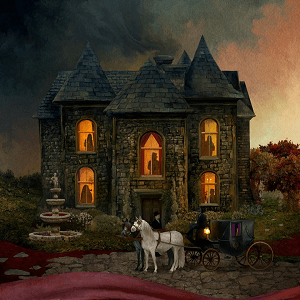
One of the progressive metal bands that actually is progressive: Opeth - In Cauda Venenum (2019)


Metal might not be as big in the mainstream as it has been in the 80s for example, but that doesn't has to be a bad thing. Not every successful album of that era was necessarily a good one. Streamlined, target audience-focused music isn't a recent invention. To me, metal being more of a niche-genre today is actually a good thing. Its still big enough to draw large crowds to festivals (well, maybe not in 2020^^) and sites like the aforementioned bandcamp, soundcloud or Youtube (yeah, Spotify is missing in this list. I don't use Spotify.) together with small independent record labels offer good platforms for new and exciting bands to be heard. I also wonder how much the current social-distancing-situation will inspire people to pick up an instrument. Like with other music equipment, they have never been that good for that little money.
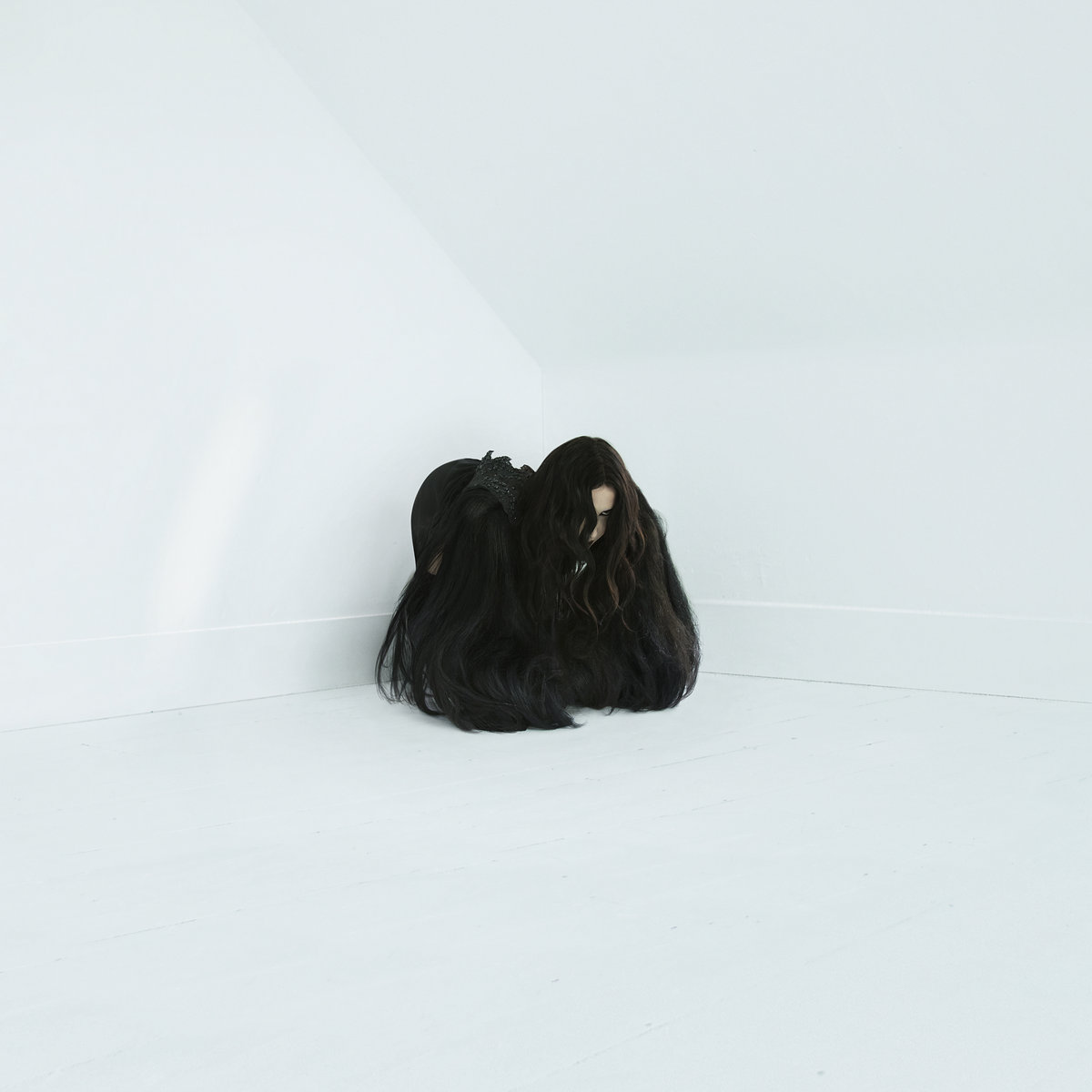
Folky, experimental doom metal. Chelsea Wolfe - Hiss Spun (2017)


So yeah, its not all doom and gloom for metal (pun intended!). Far from it, actually. There are still plenty of diamonds to discover in the dirt. You might have to dig a little to find them, but its worth it.

Sonntag, 1. September 2019

Tool - Fear Inoculum (2019)


Yay! Finally a review of a current album! Something I wasn't sure if it would ever happen, and featuring an album by Tool. Something I wasn't sure if that would ever happen either - but here we are!

I always had a rather distant relationship to Tool. Most of their songs are a bit too 'cerebral' for my taste, with their machine-like precision, polished sounds and complex rhythms. I usually prefer dirt and spontaneity instead of too much perfection.

Well good news, if you are like me then: Fear Inoculum feels definitely more dirty than its predecessors, which I find helps a lot getting access to their music. At times they did remind me actually quite a bit of Baroness or Mastodon. This said. Tool of course stays Tool, and sounds like Tool. The band also hasn't dropped any of their complexity or darkness. The production just feels a bit less cold and more dynamic this time around.

The songs are, with the exception of a handful 'breather'-tracks, all above ten minutes. Quite naturally this means the album doesn't unfolds easily. To the contrary: it is full of buildups, mood- and tempo changes and a lot of dynamic - definitely an album that wants to be discovered. I had it running almost constantly over the weekend and I can't honestly say that it hasn't revealed everything yet. It probably takes a longer time-span of repeated careful listening to get behind it - and that's great!

For somebody like me, who isn't their greatest fan, I am quite surprised that Fear Inoculum has actually quite a lot to offer. It isn't the typical stuff I'm listening to, but I find the album very appealing and quite - hypnotic. It shows great skill without being lost in virtuosity while at the same time has this atmosphere of an H.R. Giger painting: A surreal biomechanical landscape you cannot help but explore.


Freitag, 31. Mai 2019

Rainbow - Long Live Rock and Roll (1978)


Rainbow's third studio album and the last one with Ronnie James Dio. In retrospect, it's the end of an era: Blackmore, who usually changed almost the whole band lineup between albums anyway, would continue with almost completely new personnel into a much more radio-friendly direction, before eventually disbanding the band in favour of a (quite successful, yet ultimately doomed) reunion of Deep Purple. He would never again release as bold, aggressive and progressive music as he did in the second half of the 70s. What a pity!

Where Rainbow initially not that much liked, and didn't really drew large crowds to their concerts, in retrospect they are one of the defining bands of the emerging heavy-metal genre. Speed, precision, epic lyrics and operatic vocals underlining the classically inspired melodies - Rainbow got it all.

However, compared to their 1976 masterpiece Rising, Long Live Rock and Roll is often seen as the lesser record. I disagree. Rising might been more complex and longer, or more progressive, as one might argue^^ but its successor is just that bit more accessible and compact, has more memorable riffs and - thanks to its more diverse songwriting - feels more engaging. Rising might been a relentless full throttle-trip from start to finish, but Long Live... gives you that little breather from time to time that makes its punches hit you even harder when they come.

And gods, punches it gives. From its cheerfully kickass opening track to the mystical and oriental Gates of Babylon, to the speedmetal powertrip Kill the King, the album has some of the best songs and riffs the band (or Blackmore himself actually) has ever written. Just blisteringly played (and I'm sure some actual blisters were involved), with a vocal performance by Dio, that once again can only be compared to singers like Robert Plant, Rob Halford and Ro... Ian Gillan on top of their game.

It's a shame that this should be the last Rainbow album with Dio's involvement and the band's last straightforward hard-rock album, until 1995's Stranger in Us All. The albums after him were not bad, but too often too streamlined for chart-appeal and too restrained even in their wilder-moments. Luckily for us, Dio stayed true to his style, went straight to Black Sabbath, recorded two stunning albums there, before starting his own project in 1982.


Sonntag, 5. Mai 2019

Rainbow - Rising (1976)


Compared to its predecessor Ritchie Blackmore's Rainbow, Rising cranks it all up to eleven: the sword and sorcery, the heaviness, the complexity and length of the songs, the instrumental performances - it is basically the quintessential record of the Dio-era. Did the first album sound like the band was dipping their toe into a new world of hard guitar-centered music, in Rising they jumped fully into it.

Probably the best example is the epic Stargazer. Everything is larger than life in this song. A miniature-opera about the rise and (quite literal) fall of a wizard who enslaved the people to build him a tower to the stars. The way guitar and vocals are dramatizing the story here works so well and expressive and organic, with both being at the peak of their abilities, that its a pure, uplifting joy listening to.

Might the rest of the album not quite have the same epic dimension, with predominantly fast-paced songs, it is nevertheless spectacular. A good part of this is due to Cozy Powell's dense and varied drumming, which ties the songs together and works as a perfect counterpoint to the stunning performances of the albums main actors, Blackmore and Dio.

I think in hindsight you can see how influential Rising was to 80's metal: The breakneck guitar shredding, the fantasy-centered cover artwork and lyrics, delivered by an almost operatic vocalist and the occasional keyboard flavouring - all these bits became commonplaces in the decade after.
Its just a shame that the band initially wasn't too successful. About five years later, when the world was finally ready for this type of music and bands like Iron Maiden and Manowar filled the venues playing quite similar material, Blackmore had pushed Rainbow into radio-friendly territories instead. Luckily for us, Dio kept on waving the heavy-metal banner high. First with Black Sabbath and later as solo-artist with his own band.
All in all, Rising is definitely a milestone in the evolution of metal and an underrated masterpiece. And even the cover is less eye-watering than the first one!

Mittwoch, 24. April 2019

Ritchie Blackmore's Rainbow (1975)


A lot has been written about Ritchie Blackmore's departure from Deep Purple and the formation of his own project, Rainbow. That he de facto took over the band Elf, which was supporting Deep Purple while touring around that time and had a certain Ronnie James Dio on vocals... So I spare ourselves a more extensive recap. Instead, onwards to the meat and potatoes!

The album begins with Man on the Silver Mountain, which, surely not coincidentally, has some similarities to that one Deep Purple song everyone knows. Just like Smoke on the Water the main riff is played in fourths (quite a trademark of Blackmore and found in a lot of his songs throughout his career) and the song grooves confidently along in the mid-tempo range. Quite radio-friendly actually. But as similar the songs are, Ronnie James Dio's vocal performance adds a more dramatic and operatic vibe to it, than Ian Gillan does. Where Smoke on the Water muses on the very worldly events during the recording of Deep Purple's album Machine Head and even includes their exact location in its lyrics ("We all came out to Montreux..."), Man on the Silver Mountain is more cryptic and evokes mystic imagery and is located very much in fantasy-land. Or Middle Earth.

While there are some more typical rock'n'roll songs as well, namely Black Sheep of the Family and If you don't like Rock and Roll, they appear really as the weaker moments of the album. I often get the impression Blackmore isn't that comfortable playing blues or blues-based material and these songs are showcasing this pretty well. While they are technically flawlessly played, they sound maybe a bit too clinical for their own good. Maybe the band tried to emulate Led Zeppelin here. Not a bad attempt, but they just lack their swagger. And Zeppelin was all swagger really.
(I think Blackmore actually wanted Rainbow to be a mix between Led Zeppelin and Deep Purple, so there you go: Deep Zeppelin or Led Purple, take your pick.)

Luckily for the remainder of the album the band is very much speaking its own language and tries not to sound like anyone else. And to the benefit of the songs: the ballads don't try to be folky or something like that, as Zeppelin did before. Instead they take their inspiration from classical music and medieval tunes. After all, Blackmore is more a Bach- and Beethoven guy. Its quite funny to listen to songs like Temple of the King or Catch the Rainbow, realizing that twenty years before forming Blackmore's Night, he pretty much made already the same music!

Where the album really shines however, is in the hard and heavy end of the spectrum. Namely songs like Sixteenth Century Greensleeves and Snake Charmer. Here the epic fantasy can run freely: liberated from the limitations of 12-bar blues and straight into proto power-metal territory with Dio's heroic voice, heavy drumming, fast arpeggios and punchy riffs. Great songs which heritage can still be heard in today's metal.

As it is typical for a rock band of the 70's, especially with such strong lead personalities as Blackmore and Dio are, the rhythm-section - Craig Gruber on bass and Gary Driscoll on drums - stays consistently in the background. They certainly do a good job and give the songs a very naturally flowing feel while at the same time very competently delivering heaviness, but you can sense they are not the most important members of this band. Same applies to Mickey Lee Soule on the keys. At least he gets a bit of spotlight with his rock'n'roll piano in Black Sheep of the Family. But for vastly the largest part this album is very much a guitar-plus-singer album.

All in all, Ritchie Blackmore's Rainbow is a bit of a mixed bag. It certainly has great moments and historic significance. The two main protagonists Blackmore and Dio can really shine and show off their talents. On the other hand, it feels like the band hasn't fully explored their possibilities yet. Something that would change with their follow-up album Rising.
And yes, the cover is ghastly. As influential their music was, their choice of artwork sadly was so too.

Sonntag, 7. April 2019

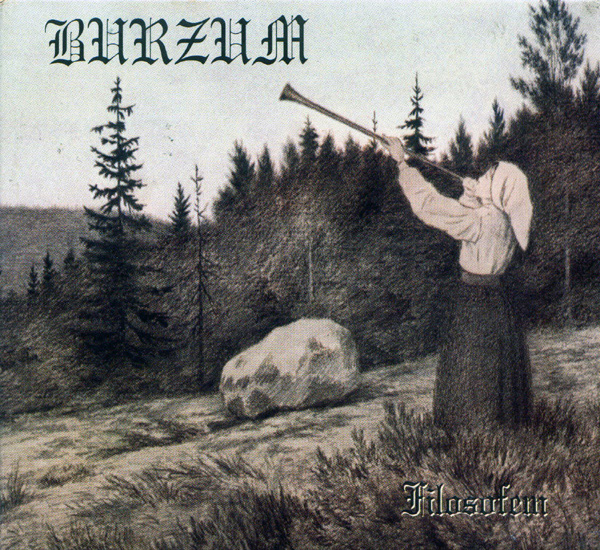
Burzum - Filosoferm (1996)


Ok, this is a tricky one for me - probably for obvious reasons if you know the history of the artist behind it. I will explore this a bit further in a minute. First, I want to take a look at what compelled me to eventually write this review: the music.

When I discovered this album (and Black Metal in general) in the early 2000s, stuff like Rammstein, Marilyn Manson and some other goth metal bands were probably the hardest and darkest music I was aware of (it was a more innocent age, you know) and hearing stuff like this for the first time was in a way repelling, I admit. Yet... fascinating.

Especially so Filosoferm. The harshness of the sound, the unconventional, hypnotically repetitiveness of the tracks - for me there wasn't anything like that really. Metal is usually a relatively conventional genre and hearing it stripped down to its bare bones, then slowed down and combined with ambient-elements you would usually expect in much kinder works, was quite an eye-opening experience to me. The album simply worked. Even if it combined on first glance quite contradictory extremes.

And these extremes could hardly be starker. It starts with the song "Dunkelheit" (=Darkness). With guitars drenched in snow-storm like white noise, distorted vocals about darkness and death and monotonous drums working steadily through the songs, while on the other end of the spectrum there is a track like the 25 minute long "Circumambulation of the Transcendental Columns of Singularity" (I spare you the german version of its name), which consists basically of an almost shy, minimalistic electronic beat and some ambient sounds; giving it a dreamlike quality. Really impressive how so much atmosphere is created by so little and how well these two extremes blend.

Groundbreaking albums often start to sound dated with time. The novelty they introduce gets picked up by others, developed and refined further, making the initial innovation appear... unfinished or even obsolete. But not in this case: Filosoferm hasn't lost anything of its impact. It sounds truly timeless; maybe because it defied following any trend or convention, but rather a concept.

As much I like this album though, as much I am repelled by its creator and his sick, neo-nazi ideology and this is the very core of the contradicting feelings I had towards this album for a long time (years in fact), and the very reason why I barely listened to it until recently.

Eventually, I made my peace with it and began to separate it mentally from its artist. For a good part because it is about emotion and conveying moods and not about propagating ideology.
Also, to me, the artists aren't as important as the art they create. Humans can be quite mundane and petty, whether they get idolised or not. Yet, with all their human flaws, they at the same time can create incredibly impactful pieces of art. And maybe they do it because they are tortured souls in one way or another, not in spite of. Just think of people like Franciso Goya, Richard Wagner or Francis Bacon. The people are long gone, but their creations will last.

In the end I wonder how much of the events back then in 1990s Norway, with all the church-burning and murders, were just some teenagers trying to one-up each other, until things got violently out of control by someone like Vickerness, who probably had (and may still have) mental issues and lost himself in the visions of destruction and death he helped create.

I also sense some genuine ambivalence within the whole Black Metal aesthetics. No doubt the music is a genuine expression of anger, fear and frustration. That's exactly what makes it so strong. The stark black-and-white aesthetics of the album covers (sadly not on Filosoferm) also has undeniable power. At the same time, corpsepaint, spikes, medieval weapons and all these accessories, are in my eyes quite juvenile ways of dressing up to appear "evil", which can devalue the earnest of what they actually want to say and therefore not the best call aesthetically.
The same applies for the choice of names from Tolkien's Ork-language (like Burzum). Sure, in the 90's Tolkien was less present in the mainstream as it is since the Peter-Jackson-films, yet again - the whole idea just doesn't fits quite right. It's actually quite kitschy. And probably was already back in the 90's.

Recent artists though seem to have found a more suitable stylistic approach. A great example is Myrkur, who uses pagan- and nature-inspired imagery so coherently and with such impact, without overdoing it and making it a "show". Musically though, I don't think artists like this would do the music they are doing without albums like Filosoferm. Like other milestones in music, it opened the door into a strange, new world for others to explore.

Samstag, 1. September 2018

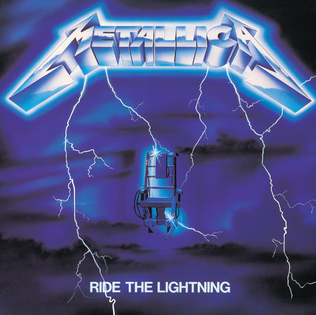
Metallica - Ride the Lightning (1984)


I have a bit of a love/hate relationship to Metallica. On the one hand, I really like their albums from the 80s, on the other hand, I find they didn't really do anything relevant, or even noteworthy in the last 20-something years. But that's not our topic for today!
Ride the Lightning is one of their records I really love. After a promising and already technically quite impressive, if a bit too simple debut-album, Kill 'Em All from 1983, Ride the Lighting is an enormous leap forward.

Before it came to that though, Metallica went through quite turbulent times. Namely rising tensions with their original vocalist/guitarist Dave Mustaine, over his violent behaviour and his drug and alcohol consume. This escalated in him being sacked from the band just before recording Kill 'Em All. As a consequence, Mustaine, while not actually playing on the album, got song writing credits on a number of tracks of their first and second album. including the eponymous Ride the Lightning and Call of Ktulu.
Mustaine went on and formed Megadeth, and Metallica found its identity in with Kirk Hammett as new lead guitarist, James Hetfield growing into his roles as vocalist and rhythm guitarist, Cliff Burton on bass and Lars Ulrich on drums. Together both bands became two of the most influential metal bands and biggest rivals of the 80s.

Were changes in tempo and dynamic not a completely new thing in rock/metal, when Ride the Lightning came out, (Led Zeppelin and Black Sabbath were doing that sort of thing more than a decade before), the way how consequentially Metallica was contrasting clean, almost folky passages with their speed and heavy, brutal riffing to build up a narrative within a song, proved to become highly influential for the genre. Technical excellence is one thing - and there is plenty of that on Ride the Lightning as well - but if you can tell a story with your music, and have some emotional impact, or at least give them time to breathe before the next full-on assault, you can catch your audiences attention on a completely new level.
And the album is bursting with great ideas and songs. May it be thrashers like Fight Fire with Fire or Creeping Death, epic narratives like For Whom The Bell Tolls or Fade to Black, or the brilliant instrumental The Call of Ktulu or the breakneck-speed ride Trapped Under Ice - they all show a masterful level of catchy songwriting, variety and spot on instrumental performances. It is no surprise that this album is still some of their most known and liked ones and part of what defined metal in the 80s.